For years, B2B marketing teams relied heavily on external data, third-party audience segments, broad targeting, and platform-driven reach. These methods helped companies expand campaigns quickly, but the market has changed.
Buyers now expect more relevant communication. Privacy expectations are higher. Compliance requirements are stronger. Digital channels are more crowded. At the same time, many businesses are realizing that the most valuable data they own is not sitting outside the organization.
It is the data they collect through their own relationships, campaigns, content, and customer interactions.
That is why first-party data is becoming one of the most important growth assets in B2B.
What first-party data really means
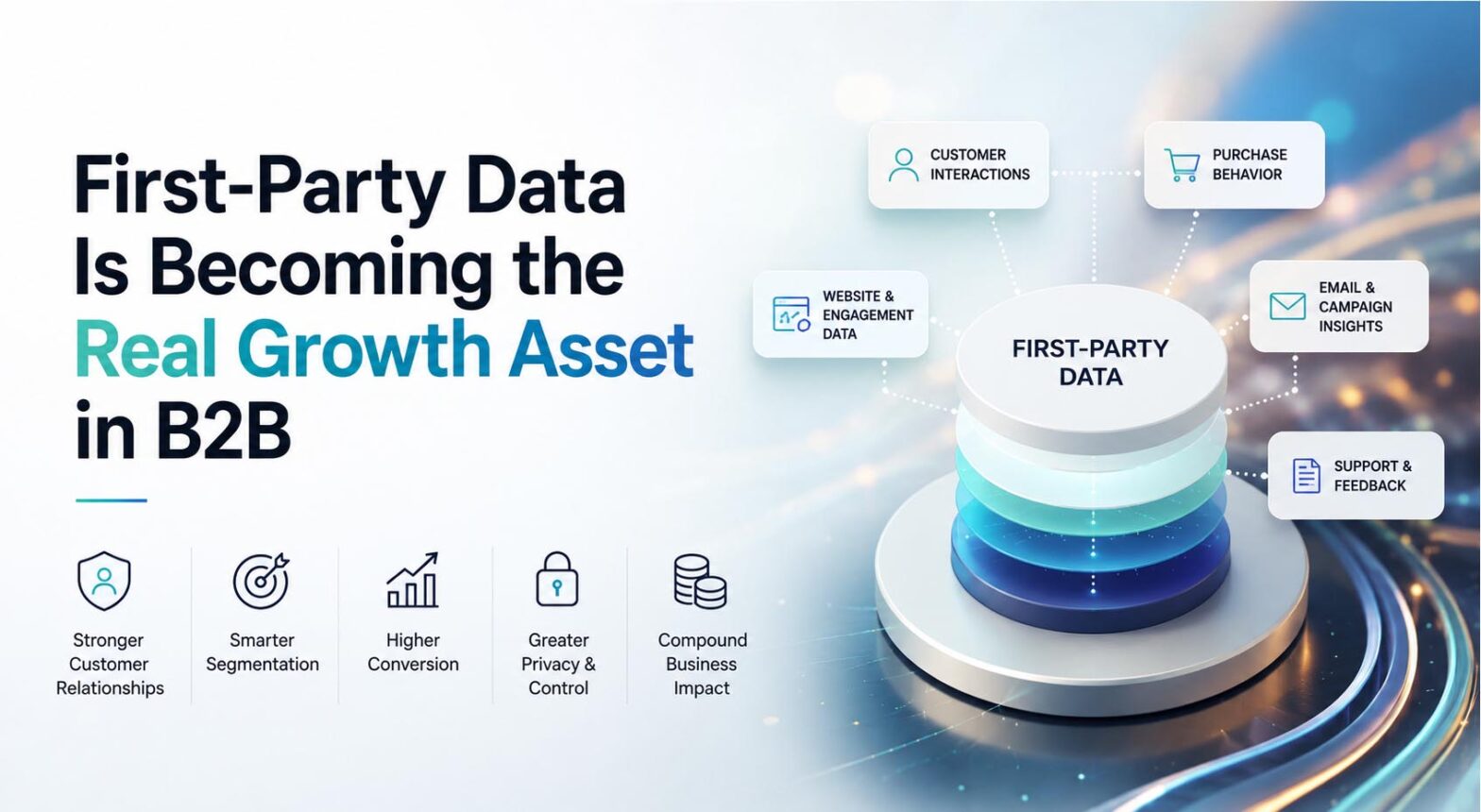
First-party data is information a business collects directly from its own audience, prospects, customers, and campaign interactions.
In B2B, this can include:
- Webinar registrations
• Content downloads
• Newsletter engagement
• Website activity
• Event attendance
• Form submissions
• CRM records
• Sales conversations
• Email engagement
• Survey responses
• Product interest
• Customer feedback
• Account-level campaign activity
This data is powerful because it is based on direct interaction. It tells a company who is engaging, what topics matter to them, how frequently they interact, and where interest may be developing.
Unlike broad third-party targeting, first-party data gives a business a clearer view of its own market relationships.
Why first-party data matters more now
The B2B buyer journey has become more complex. A buyer may engage with several pieces of content before ever speaking to sales. They may attend a webinar, read an article, download a report, and discuss the topic internally without submitting a direct purchase request.
If these signals are captured properly, they can help marketing and sales teams understand buyer interest more accurately.
First-party data also improves relevance. A company that knows a prospect has engaged with cybersecurity content should not send the same follow-up as someone who engaged with finance automation content. A prospect who attends multiple webinars should not be treated the same as someone who only opened one email.
The more clearly a business understands engagement, the more useful its communication becomes.
This is important because B2B buyers are tired of generic outreach. They expect vendors to understand context. First-party data helps create that context.
Data ownership is becoming a competitive advantage
Many businesses have relied on platforms to reach buyers. Social networks, ad platforms, search engines, and third-party databases all play a role in B2B marketing. But when a company depends too heavily on external platforms, it has limited control.
Rules can change. Costs can rise. Reach can decline. Data access can become restricted. Targeting options can shift.
First-party data gives businesses more control over their growth engine.
It allows companies to build their own audience intelligence over time. It supports stronger segmentation, better nurture, more accurate lead scoring, and more meaningful sales handoff. It also helps teams understand which topics, industries, accounts, and personas are showing real engagement.
This is not just a marketing advantage. It is a business advantage.
Companies with strong first-party data can make better decisions across sales, marketing, product, customer success, and leadership.
The challenge is not collection, it is organization
Many B2B companies already collect first-party data. The problem is that the data is often scattered.
The CRM may hold sales records. The marketing automation platform may hold email activity. The webinar platform may hold attendance data. Website analytics may show page visits. Event tools may store registration details. Sales teams may keep important notes that never become visible to marketing.
This creates an incomplete view of the buyer.
A prospect may look inactive in one system but highly engaged in another. An account may appear cold in the CRM while multiple stakeholders are interacting with content. A lead may be passed to sales without the full engagement history.
When data is fragmented, teams make weaker decisions.
To unlock the value of first-party data, businesses need integration and structure. They need clean fields, consistent tagging, clear campaign naming, proper source tracking, and shared reporting. Without this discipline, first-party data becomes another pile of disconnected information.
Clean data improves lead quality
Lead quality is one of the biggest concerns in B2B demand generation. Clients do not just want more names. They want contacts that match the right profile, show meaningful interest, and can be followed up with confidence.
First-party data can improve lead quality because it captures actual engagement. It helps teams understand the difference between casual interest and stronger intent.
For example, one person downloading a broad industry report may be at an early research stage. Another person from the same company attending a product-focused webinar, opening related emails, and visiting a solution page may show stronger interest. An account where several stakeholders engage across multiple assets may be even more important.
This context helps marketing teams qualify better and helps sales teams prioritize smarter.
It also reduces waste. Sales teams should not spend the same effort on every lead. First-party data helps identify which leads need immediate attention and which should remain in nurture.
Consent and compliance cannot be ignored
First-party data is valuable, but it must be handled responsibly.
B2B companies sometimes make the mistake of thinking business data is less sensitive than consumer data. But work email addresses, job titles, phone numbers, company names, and engagement history can still identify individuals. This means data collection and usage must be clear, lawful, and transparent.
Consent records matter. Privacy language matters. Data retention matters. Access controls matter. Opt-out processes matter.
Responsible data management is no longer only a legal requirement. It is a trust signal.
When buyers interact with a brand, they expect their information to be handled properly. If they feel misled or over-targeted, trust breaks quickly. Strong compliance protects both the buyer and the brand.
For B2B demand generation companies, this is especially important. Clients want confidence that leads are collected, validated, and delivered with proper consent and accuracy.
First-party data strengthens personalization
Personalization is often misunderstood.
It is not simply adding a first name to an email or mentioning the company name in the subject line. True personalization is about relevance.
First-party data allows companies to personalize based on actual behavior and interest. If a prospect engages with content about AI in customer service, the next communication can build on that topic. If an account shows interest in compliance content, sales can prepare a more relevant conversation. If a buyer attends a webinar but does not request a demo, nurture can continue with educational material instead of immediate pressure.
This creates a better buyer experience.
The goal is not to make buyers feel tracked. The goal is to make communication useful.
Good personalization should feel helpful, not intrusive.
First-party data supports stronger nurture
Not every lead is ready for sales. In fact, many B2B leads need time before they are ready to have a commercial conversation.
This is where nurture becomes important.
First-party data helps businesses design nurture paths based on engagement. A lead interested in digital transformation may receive different content than a lead interested in cybersecurity. A senior executive may need business impact content, while a technical manager may need implementation detail. A prospect who engages repeatedly may receive a stronger call to action.
Without first-party data, nurture often becomes generic. Everyone receives the same sequence, regardless of interest or stage.
With first-party data, nurture becomes more intelligent.
This improves long-term conversion because buyers receive content that matches their needs instead of random follow-up.
The role of first-party data in account-based marketing
First-party data is also becoming critical for account-based marketing.
ABM depends on understanding account-level engagement. It is not enough to know that one person from a target account clicked an email. Teams need to know how many people from the account are engaging, which roles they hold, what topics they care about, and whether engagement is increasing over time.
This helps identify buying group activity.
If multiple stakeholders from the same company interact with related content, that may suggest internal discussion. If engagement comes from different departments, the account may be moving toward a more serious evaluation. This insight can help sales approach the account with better timing and context.
First-party data turns ABM from a static target account list into a more responsive strategy.
What B2B companies should do next
B2B companies should begin by auditing the data they already have.
The important questions are:
- Where is our first-party data collected?
• Which systems store it?
• Is the data accurate and updated?
• Do sales and marketing have shared visibility?
• Are consent records clear?
• Can we segment audiences properly?
• Do we know which topics and accounts are showing engagement?
• Is our nurture strategy based on behavior or guesswork?
These questions help identify gaps.
The next step is to improve data quality. Businesses should remove duplicates, validate contact information, standardize fields, review consent language, and connect key systems. They should also define how engagement signals are scored and used.
First-party data becomes more valuable when teams agree on what it means.
Final thoughts
First-party data is becoming one of the strongest growth assets in B2B because it helps companies understand their audience through real engagement.
It improves targeting, qualification, personalization, nurture, sales handoff, and account intelligence. It gives businesses more control over their market relationships. It also supports stronger compliance and trust when managed responsibly.
But first-party data is not valuable simply because it exists. It becomes valuable when it is accurate, connected, validated, and used with purpose.
The future of B2B growth will depend on the ability to understand buyers better. Companies that build strong first-party data strategies will have a clear advantage.
They will not just reach more people. They will reach the right people with better context.
In a market where attention is hard to earn, that difference matters.