The B2B buyer journey has changed dramatically.
For many years, marketers could rely on a relatively predictable process. Buyers would identify a challenge, engage with vendors, request information, compare solutions, and eventually make a purchasing decision.
Today, that journey looks very different.
Modern buyers have more information, more choices, and more control than ever before. They can conduct extensive research independently, access expert insights instantly, and evaluate potential solutions long before they speak with a sales representative.
As a result, traditional marketing approaches are becoming less effective.
The organisations that succeed are those that understand how the buyer journey has evolved and adapt their strategies accordingly.
Because in today's market, understanding buyer behaviour is often just as important as understanding your product or service.
The Buyer Is More Informed Than Ever
One of the biggest changes in B2B purchasing is the availability of information.
Today's buyers can access:
- Industry research
- Analyst reports
- Peer recommendations
- Product reviews
- Educational webinars
- Thought leadership content
- Case studies
- Online communities
Within minutes, decision-makers can gather insights that previously required multiple vendor conversations.
This means buyers often enter sales discussions with a strong understanding of their challenges and potential solutions.
The days of sales teams controlling information are largely over.
Buyers now control the research process.
The Journey Is No Longer Linear
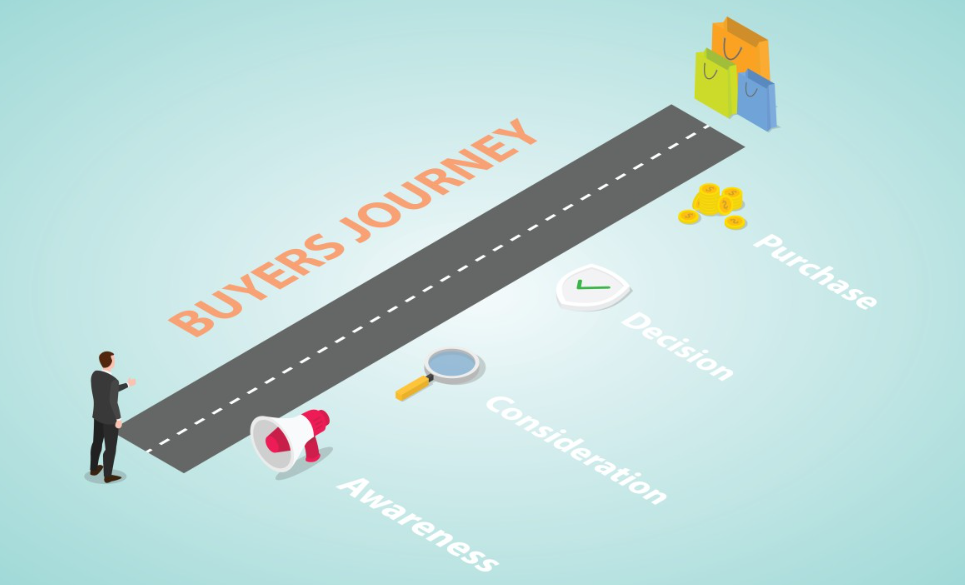
Traditional marketing funnels often assume buyers move through a series of predictable stages.
Awareness.
Consideration.
Decision.
Reality is rarely that simple.
Modern buyers frequently move back and forth between stages.
For example, a prospect may:
- Download a research report.
- Attend a webinar.
- Pause their evaluation for several months.
- Restart research after receiving budget approval.
- Engage multiple stakeholders.
- Revisit previously consumed content.
The journey becomes dynamic rather than sequential.
This complexity requires marketers to remain relevant throughout extended buying cycles rather than focusing solely on immediate conversion.
Buying Committees Are Growing
Another major shift is the increasing number of stakeholders involved in purchasing decisions.
A typical B2B purchase may involve:
- Executive leadership
- Finance teams
- Operations leaders
- IT stakeholders
- Procurement teams
- Departmental managers
Each stakeholder brings different priorities and concerns.
For example:
- Finance may focus on ROI.
- IT may focus on implementation.
- Operations may focus on efficiency.
- Leadership may focus on strategic outcomes.
This means marketing content must address multiple perspectives rather than targeting a single decision-maker.
The organisations that successfully support buying committees often create stronger opportunities.
Trust Is Built Before Sales Engagement
Many marketers still assume trust is established during sales conversations.
In reality, trust often begins much earlier.
Before contacting a vendor, buyers may have already:
- Visited the company website
- Read multiple articles
- Attended webinars
- Downloaded content
- Followed social activity
Each interaction contributes to perception.
By the time a sales conversation occurs, buyers often have a preliminary opinion regarding the organisation's expertise and credibility.
This is why thought leadership and educational content have become increasingly important.
They help build trust long before direct engagement begins.
Content Plays a Bigger Role Than Ever
Because buyers conduct so much independent research, content has become one of the most influential components of the buyer journey.
Effective content helps buyers:
- Understand challenges
- Explore opportunities
- Evaluate approaches
- Build internal business cases
- Compare solutions
This is why organisations continue investing in:
- Articles
- Webinars
- Research reports
- Case studies
- Benchmark studies
- Educational guides
Content is no longer simply a marketing asset.
It is often a critical part of the purchasing process itself.
Why Buyer Intent Matters
Not every prospect is actively looking to buy.
Some are exploring future initiatives.
Some are researching industry trends.
Others are actively evaluating solutions.
Understanding these differences is becoming increasingly important.
Intent signals help marketers identify prospects demonstrating stronger levels of interest.
Examples include:
- Multiple content interactions
- Repeat website visits
- Webinar attendance
- Topic-specific engagement
- Research activity
These signals provide valuable context regarding where buyers may be within their journey.
What Modern Marketers Must Do Differently
To succeed in today's environment, marketers must adapt their strategies.
Several principles are becoming increasingly important.
Focus on Education
Buyers value organisations that help them make informed decisions.
Prioritise Relevance
Content should align with audience needs and interests.
Support Long Buying Cycles
Not every prospect is ready to buy immediately.
Create Multi-Stakeholder Content
Different decision-makers require different information.
Measure Business Impact
Pipeline contribution and opportunity creation matter more than activity alone.
These principles align marketing efforts more closely with modern buyer behaviour.
Final Thoughts
The B2B buyer journey has become more complex, more independent, and more research-driven than ever before.
Buyers have greater access to information.
Purchasing decisions involve more stakeholders.
Trust is established earlier.
And content plays a larger role throughout the process.
The organisations that understand these changes will be better positioned to create meaningful engagement and long-term growth.
Because successful marketing is no longer about guiding buyers through a predefined funnel.
It is about supporting them throughout a journey they increasingly control themselves.