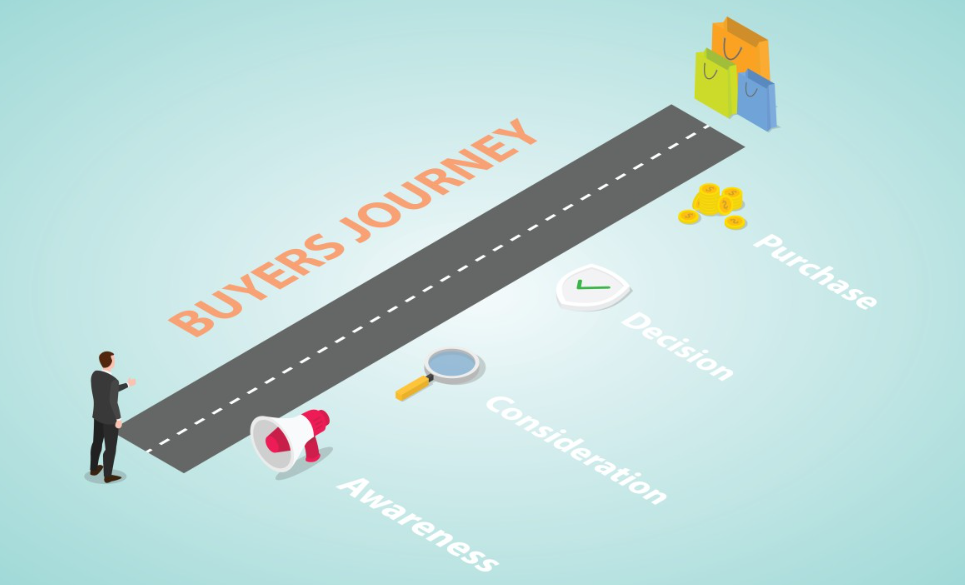

Modern B2B buyers have changed.
They are more informed, more independent, and more selective than ever before. They have access to endless sources of information and can research potential solutions long before speaking with a vendor.
As a result, expectations have evolved significantly.
Buyers no longer evaluate organisations solely on the products they offer. They also evaluate the quality of every interaction throughout the buying process.
One of the most important factors influencing those interactions is relevance.
Today's buyers expect communication, content, and engagement to be relevant at every stage of their journey.
Not occasionally.
Not only when they are ready to buy.
At every stage.
The organisations that understand this shift are creating stronger buyer experiences and generating better business outcomes.
The End of Generic Marketing
There was a time when broad marketing messages could generate meaningful engagement.
A single campaign could be distributed across an entire database with minimal segmentation.
The objective was simple:
Reach as many people as possible.
Today's buyers expect more.
They are exposed to hundreds of marketing messages every week.
As a result, they quickly ignore communication that feels generic, irrelevant, or disconnected from their priorities.
Modern buyers expect organisations to understand:
- Their industry
- Their role
- Their challenges
- Their objectives
- Their stage in the buying process
Relevance has become a baseline expectation rather than a competitive advantage.
Why Buyer Needs Change Throughout the Journey
One of the biggest mistakes organisations make is assuming buyers need the same information throughout the entire decision-making process.
In reality, buyer priorities evolve.
Early Stage
At the beginning of the journey, buyers are focused on understanding challenges and opportunities.
They often seek:
- Industry trends
- Research reports
- Educational articles
- Benchmark studies
- Thought leadership
At this stage, promotional messaging tends to be less effective.
Buyers are still learning.
Middle Stage
As research progresses, buyers begin evaluating possible approaches.
Their focus shifts towards:
- Best practices
- Solution categories
- Strategic frameworks
- Implementation considerations
- Comparative insights
The information they consume becomes more specific and practical.
Late Stage
Eventually, buyers enter active evaluation and decision-making phases.
Now they seek:
- Case studies
- Customer success stories
- Vendor expertise
- Product information
- Business justification
The questions become more focused on execution and outcomes.
This progression highlights why relevance must evolve alongside buyer needs.
Why Relevance Creates Better Engagement
People engage with information that helps them achieve something.
They ignore information that does not.
This is true regardless of industry, geography, or company size.
Relevant communication helps buyers:
- Solve problems
- Learn new ideas
- Make informed decisions
- Reduce uncertainty
- Build confidence
Because relevance creates value, it naturally improves engagement.
Organisations that consistently provide relevant information often experience:
- Higher content consumption
- Better email performance
- Increased webinar attendance
- Stronger lead quality
- Improved buyer experiences
These outcomes contribute directly to marketing effectiveness.
Content Plays a Critical Role
Content remains one of the most powerful tools for delivering relevance throughout the buyer journey.
Different content formats serve different purposes.
Articles
Help buyers understand challenges and emerging trends.
Research Reports
Provide deeper insights and market intelligence.
Webinars
Create opportunities for education and interaction.
Case Studies
Demonstrate practical outcomes and real-world success.
Guides and Frameworks
Help buyers evaluate options and plan next steps.
When aligned with buyer needs, content becomes significantly more valuable.
Why Personalisation Alone Is Not Enough
Many organisations assume relevance and personalisation are the same thing.
They are not.
Personalisation may include:
- First names
- Company names
- Job titles
While these elements can improve communication, they do not automatically create relevance.
True relevance comes from understanding:
- What buyers care about
- What challenges they face
- What information they need
A personalised message can still be irrelevant.
A relevant message creates value regardless of whether personalisation exists.
This distinction is becoming increasingly important in modern B2B marketing.
Relevance Improves Sales and Marketing Alignment
Relevance benefits more than just marketing performance.
It also improves collaboration between marketing and sales.
When marketing provides relevant content and engagement opportunities:
- Lead quality improves
- Qualification becomes easier
- Sales conversations become more productive
- Buyer expectations become clearer
This alignment helps create smoother buyer journeys and stronger revenue outcomes.
What High-Performing Organisations Do Differently
The strongest demand generation programmes prioritise relevance throughout every stage of the buyer experience.
Their strategies typically include:
Audience Research
Understanding buyer priorities and challenges.
Segmentation
Delivering content to the right audiences.
Journey Mapping
Aligning communication with buying stages.
Educational Content
Providing value before requesting commitment.
Continuous Optimisation
Using engagement insights to improve relevance over time.
These practices help organisations remain valuable throughout extended buying journeys.
The Future of B2B Marketing Is Relevance
As buyers continue gaining access to more information, their expectations will continue increasing.
The organisations that succeed will not necessarily be those with the largest budgets or the most advanced technology.
They will be the organisations that consistently deliver the most relevant experiences.
Because buyers reward relevance with attention.
Attention creates engagement.
Engagement creates trust.
And trust creates opportunity.
Final Thoughts
Modern B2B buyers expect relevance at every stage of their journey because they have more choices than ever before.
They no longer tolerate generic communication or one-size-fits-all marketing approaches.
Instead, they engage with organisations that understand their needs and provide valuable information at the right time.
The organisations that recognise this shift are building stronger relationships, generating better opportunities, and creating more effective demand generation programmes.
Because in today's market, relevance is no longer a marketing tactic.
It is a buyer expectation.