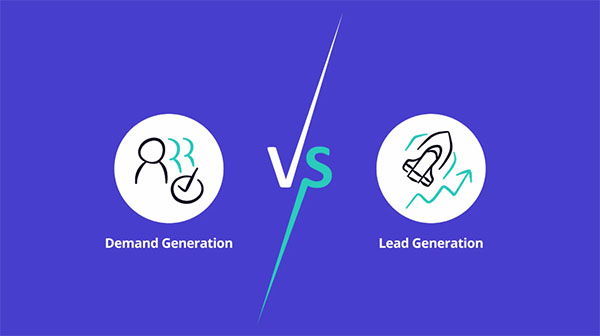
The terms "Lead Generation" and "Demand Generation" are often used interchangeably in B2B marketing.
Many organisations treat them as the same activity. Marketing plans frequently combine both under a single strategy, and campaign performance is often measured using the same metrics.
However, while the two disciplines are closely connected, they are not the same thing.
Understanding the difference is important because each serves a distinct purpose within the buyer journey.
Lead Generation focuses on capturing interest.
Demand Generation focuses on creating interest.
The most successful B2B organisations understand how both work together to support long-term growth.
What Is Lead Generation?
Lead Generation is the process of identifying and capturing potential buyers who have expressed interest in a product, service, or topic.
The objective is straightforward:
Convert anonymous prospects into identifiable contacts.
Common lead generation activities include:
- Content syndication
- Webinar registrations
- Whitepaper downloads
- Contact forms
- Event registrations
- Telemarketing campaigns
- Newsletter sign-ups
The outcome is typically a lead that can be nurtured, qualified, and eventually passed to sales.
Lead Generation focuses on collecting information and initiating engagement.
It answers the question:
Who is interested?
What Is Demand Generation?
Demand Generation operates at a broader level.
Rather than focusing on capturing existing interest, Demand Generation focuses on creating awareness and educating buyers before they are ready to engage directly.
Its objective is to generate demand within the market.
Activities often include:
- Thought leadership
- Industry articles
- Research reports
- Educational webinars
- Social content
- Brand awareness campaigns
- Analyst partnerships
- Market education initiatives
Demand Generation helps buyers understand:
- Challenges they may be facing
- Opportunities they should consider
- Trends affecting their industry
- Possible approaches to solving business problems
It answers the question:
Why should buyers care?
Why Many Organisations Confuse the Two
The confusion exists because both disciplines often use similar channels.
For example:
A webinar may generate leads.
It may also create demand.
A research report may capture contact information.
It may also educate prospects.
The activity itself is not what determines whether something is lead generation or demand generation.
The objective does.
If the primary goal is collecting contact information, the initiative is lead generation.
If the primary goal is educating the market and creating awareness, the initiative is demand generation.
Many successful campaigns accomplish both simultaneously.
Demand Generation Comes First
One of the biggest misconceptions in B2B marketing is the belief that organisations can generate leads without first creating demand.
In reality, buyers rarely engage unless they see value in doing so.
Before someone downloads content or attends a webinar, they must first recognise:
- A challenge exists
- The topic is relevant
- The information is valuable
- The organisation is credible
Demand Generation creates these conditions.
It builds awareness and trust before lead capture occurs.
Without demand, lead generation becomes significantly more difficult.
Why Demand Generation Creates Better Leads
Demand Generation improves lead quality because it educates buyers before engagement.
Prospects who consume educational content often have a stronger understanding of:
- Their business challenges
- Potential solutions
- Industry trends
- Strategic priorities
This makes future conversations more productive.
Instead of generating contacts who are simply curious, organisations generate prospects who are informed and engaged.
As a result:
- Lead quality improves
- Conversion rates increase
- Sales conversations become more valuable
Demand Generation creates better-prepared buyers.
Why Lead Generation Still Matters
While Demand Generation creates awareness, organisations still need mechanisms to identify potential opportunities.
This is where Lead Generation plays a critical role.
Lead Generation helps businesses:
- Build databases
- Identify prospects
- Capture engagement
- Support qualification
- Create pipeline
Without lead capture, it becomes difficult to convert market interest into measurable business outcomes.
The goal is not choosing one approach over the other.
The goal is combining both effectively.
What High-Performing Organisations Do Differently
The strongest demand generation teams understand the relationship between education and acquisition.
They invest in:
Market Education
Helping buyers understand challenges and opportunities.
Thought Leadership
Building trust through expertise.
Audience Development
Creating visibility among relevant decision-makers.
Lead Capture
Identifying interested prospects through meaningful engagement.
Nurturing
Supporting buyers throughout longer decision-making cycles.
This balanced approach creates both awareness and opportunities.
The Future of B2B Marketing
As buying journeys become more complex, Demand Generation will continue growing in importance.
Buyers increasingly prefer to educate themselves before speaking with vendors.
This means organisations must create value long before they ask for contact information.
However, Lead Generation will remain equally important because businesses still need ways to identify and engage interested prospects.
The future belongs to organisations that understand how these disciplines complement each other.
Final Thoughts
Lead Generation and Demand Generation are not competing strategies.
They are different stages of the same growth process.
Demand Generation creates awareness.
Lead Generation captures interest.
Demand Generation builds trust.
Lead Generation creates opportunities.
Demand Generation influences future buyers.
Lead Generation identifies active buyers.
Together, they create a complete revenue engine.
Because the most successful organisations do not simply focus on generating leads.
They focus on generating demand first and leads second.
And that distinction often determines long-term success.