
The way B2B buyers make purchasing decisions has changed dramatically over the past decade.
In the past, buyers often relied heavily on sales representatives to understand available solutions, compare vendors, and evaluate their options. Sales conversations played a central role in educating prospects and guiding purchasing decisions.
Today, the situation is very different.
Modern buyers have access to an almost unlimited amount of information. Research reports, webinars, industry articles, peer reviews, podcasts, videos, case studies, and analyst insights are available within seconds. Buyers can educate themselves long before they ever speak with a vendor.
This shift has fundamentally changed the role of demand generation.
Generating awareness is no longer enough.
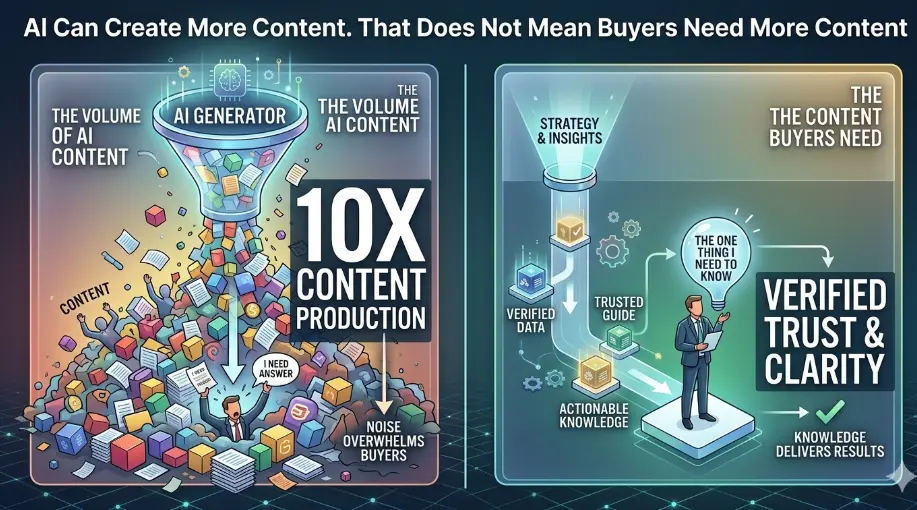
The organisations achieving the strongest results today are those that focus on educating buyers rather than simply marketing to them.
The Modern Buyer Is More Independent
Recent changes in buyer behaviour have created a more self-directed purchasing process.
Before engaging with a vendor, buyers often spend weeks or even months researching:
- Industry challenges
- Potential solutions
- Market trends
- Vendor capabilities
- Best practices
- Internal business cases
By the time they reach out to a supplier, they may already have a strong understanding of the problem they are trying to solve.
This means traditional product-focused marketing is becoming less effective.
Buyers are not looking for sales pitches.
They are looking for insights.
They want information that helps them make better decisions.
Why Education Builds Trust
One of the biggest benefits of educational marketing is trust.
Trust is rarely built through promotional messaging alone.
Instead, trust develops when organisations consistently provide useful information that helps buyers navigate challenges and understand opportunities.
Educational content demonstrates expertise.
It shows that an organisation understands:
- Industry trends
- Market challenges
- Buyer priorities
- Business objectives
Over time, this credibility becomes a significant competitive advantage.
When buyers eventually enter an active purchasing process, they are far more likely to engage with organisations they already view as trusted sources of information.
The Difference Between Promotion and Education
Many organisations unintentionally focus too heavily on promotion.
Their content frequently answers questions such as:
- Why is our solution better?
- What features do we offer?
- Why should you choose us?
While these topics have their place, they often appear too early in the buyer journey.
Educational content focuses on different questions.
For example:
- What industry trends should organisations prepare for?
- What challenges are businesses currently facing?
- What common mistakes should companies avoid?
- What strategies are delivering results?
- What opportunities are emerging?
These topics create value regardless of whether the buyer is ready to purchase.
That value strengthens engagement and increases credibility.
Educational Content Drives Better Engagement
One reason educational content performs so well is because it aligns with buyer intent.
People actively seek information that helps them solve problems.
This is why content such as:
- Research reports
- Whitepapers
- Webinars
- Benchmark studies
- Industry articles
- Expert interviews
continues to play a critical role in demand generation programmes.
These resources support the buyer's research process rather than interrupting it.
As a result, engagement is often stronger and more meaningful.
Supporting the Entire Buying Journey
Buyer education is valuable because it supports prospects at every stage of the journey.
Early Stage
At this point, buyers are trying to understand a challenge or opportunity.
Educational content helps create awareness and build understanding.
Mid Stage
Buyers begin exploring possible approaches and solutions.
Industry insights, case studies, and expert guidance become increasingly valuable.
Late Stage
Prospects evaluate vendors and compare options.
At this stage, more solution-focused content can help support decision-making.
Educational content creates continuity throughout the entire process.
It allows organisations to remain relevant long before formal sales conversations begin.
Why Educational Marketing Creates Better Leads
One of the most overlooked benefits of buyer education is lead quality.
Educational engagement often reveals valuable signals about buyer interest and intent.
For example:
- A prospect attending multiple webinars
- A decision-maker downloading industry reports
- A visitor regularly consuming thought leadership content
These actions often indicate stronger interest than a single content download or form submission.
As a result, educational programmes frequently generate higher-quality opportunities over time.
The Future of Demand Generation
The future of demand generation is increasingly centred around helping buyers make informed decisions.
Technology will continue to evolve.
Marketing channels will continue to change.
Buyer expectations will continue to increase.
Yet one principle remains constant.
People engage with organisations that help them.
The businesses that consistently educate their audiences will continue to earn attention, build trust, and create demand.
Not because they sell the most aggressively.
But because they provide the most value.
Final Thoughts
Demand generation is no longer simply about attracting prospects.
It is about helping them navigate complex decisions.
The organisations that succeed will be those that invest in educating buyers before attempting to sell to them.
Educational content builds trust.
Trust creates engagement.
Engagement creates opportunities.
And opportunities create growth.
Because in modern B2B marketing, the companies that teach effectively are often the companies that grow most successfully.