
Over the past decade, lead generation has become increasingly automated.
Marketing automation platforms, AI-powered tools, intent data providers, predictive analytics solutions, and audience targeting technologies have transformed the way organisations identify and engage prospects. These advancements have helped marketers generate leads faster and at a larger scale than ever before.
While automation has undoubtedly improved efficiency, it has also introduced a new challenge.
Quality.
As lead generation processes become more automated, many organisations are discovering that technology alone does not always guarantee accuracy, relevance, or qualification.
This realisation is driving a growing trend across the industry:
The return of human validation.
Leading demand generation organisations are increasingly combining technology with human expertise to improve lead quality and create better business outcomes.
The future of lead generation is not fully automated.
It is intelligently validated.
Why Automation Alone Is Not Enough
Automation excels at handling repetitive processes.
It can:
- Process large datasets
- Identify patterns
- Score leads
- Trigger workflows
- Track engagement
- Deliver campaigns
However, automation has limitations.
Technology may identify a prospect based on predefined criteria, but it cannot always determine whether that individual is truly relevant to a campaign's objectives.
For example:
- A job title may appear relevant but no longer reflect actual responsibilities.
- A company may fit target criteria but no longer be pursuing the initiative being promoted.
- Contact information may be outdated despite appearing valid within a database.
- Engagement activity may indicate curiosity rather than genuine buying intent.
These gaps can significantly impact campaign performance.
The result is often a large volume of leads with varying levels of quality.
The Cost of Poor Validation
Lead generation does not end when a contact enters the database.
Every lead influences downstream business processes.
When lead quality is inconsistent, the consequences can be significant.
Reduced Sales Productivity
Sales teams spend time pursuing contacts that are unlikely to convert into opportunities.
This reduces efficiency and limits focus on higher-value prospects.
Lower Conversion Rates
Poorly qualified leads often progress slowly or fail to progress at all.
This creates inflated funnel metrics that do not translate into revenue.
Marketing Inefficiency
Campaigns may appear successful based on lead volume while generating limited business impact.
Damaged Trust Between Teams
One of the most common causes of tension between marketing and sales is disagreement regarding lead quality.
Human validation helps address many of these challenges before they affect performance.
What Human Validation Actually Means
Human validation is not about replacing technology.
It is about strengthening it.
The process involves reviewing and verifying information that automation alone may struggle to evaluate accurately.
This can include:
Contact Verification
Confirming that contact details remain current and valid.
Role Validation
Ensuring the individual genuinely aligns with campaign targeting requirements.
Audience Qualification
Assessing whether prospects fit the intended buyer profile.
Data Enrichment
Adding additional context that improves audience understanding.
Intent Assessment
Evaluating engagement signals alongside human judgement.
These activities help improve confidence in generated leads.
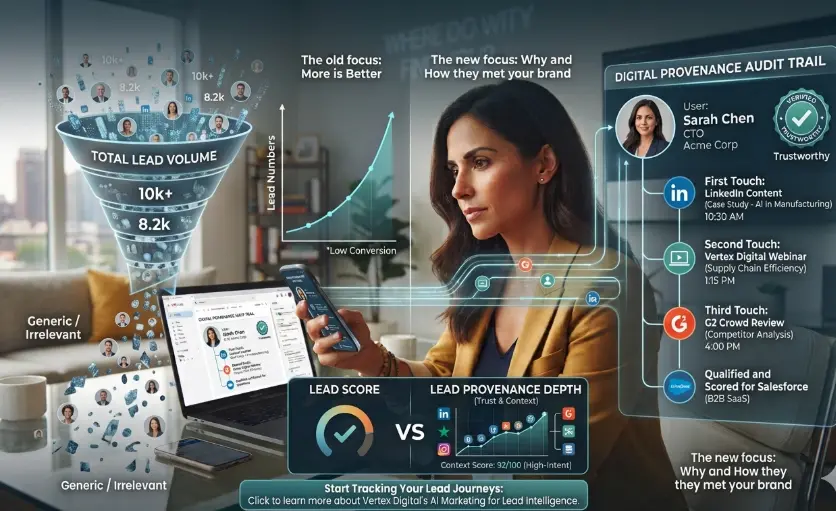
Why Quality Is Becoming More Important Than Volume
Historically, many organisations focused heavily on lead quantity.
The assumption was that larger lead volumes would naturally generate more opportunities.
Today's marketers are taking a different approach.
They increasingly recognise that:
- 100 highly qualified leads often outperform 1,000 poorly qualified leads.
- Relevant conversations create more value than database growth.
- Pipeline contribution matters more than lead counts.
This shift is changing how demand generation programmes are measured.
Quality is becoming the primary objective.
Human validation plays a critical role in achieving it.
Human Validation Improves Buyer Experience
Lead quality does not only affect internal teams.
It also influences buyers.
When targeting is inaccurate, prospects often receive irrelevant communications.
This creates frustration and reduces engagement.
Validated audiences help ensure that content reaches individuals who are genuinely likely to find it valuable.
As a result:
- Engagement improves
- Relevance increases
- Buyer experience becomes stronger
This creates benefits for both marketers and prospects.
The Most Effective Approach: Technology Plus Human Expertise
The strongest lead generation programmes do not rely exclusively on either automation or manual processes.
Instead, they combine the strengths of both.
Technology provides:
- Scale
- Speed
- Efficiency
- Data processing
Human validation provides:
- Context
- Accuracy
- Judgement
- Relevance
Together, they create a more balanced and effective lead generation model.
This approach allows organisations to maintain efficiency while improving quality.
What High-Performing Demand Generation Teams Are Doing
Leading organisations increasingly invest in validation processes throughout the lead lifecycle.
These may include:
- Audience verification before campaign launch
- Data quality reviews during delivery
- Human qualification checks
- Contact validation procedures
- Ongoing database maintenance
The objective is simple.
Deliver opportunities that sales teams can trust.
Trust improves collaboration.
Collaboration improves performance.
Performance drives revenue.
Final Thoughts
Technology will continue to play a central role in lead generation.
Artificial intelligence, automation, and data analytics will remain critical tools for modern marketers.
However, as automation becomes increasingly widespread, quality will become an even more important differentiator.
The organisations generating the strongest results will not necessarily be those with the largest databases or the most advanced technology.
They will be the organisations that combine technology with human expertise.
Because while automation can generate leads, human validation helps ensure those leads are worth pursuing.
And in modern demand generation, that difference can have a significant impact on business outcomes.