
Introduction
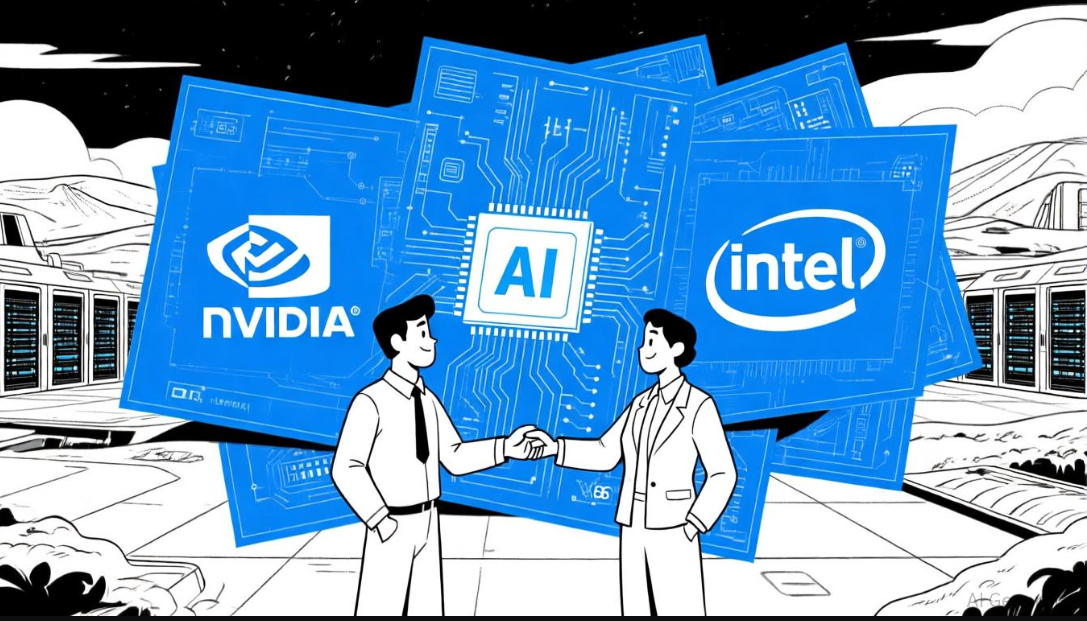
Nvidia has announced a strategic investment of $5 billion in Intel by acquiring common stock at $23.28 per share. Alongside the investment comes a partnership to collaborate on custom data center hardware and integrated PC chipsets. This development arrives as the U.S. government recently acquired a 10 percent stake in Intel in an effort to reinforce domestic semiconductor capabilities. Together these moves may reshape the semiconductor landscape for AI infrastructure and enterprise computing.
Why This Matters for B2B
Companies in cloud, enterprise software, data center operations, and AI development rely heavily on both CPUs and GPUs to scale workloads. Intel has long been the dominant name in conventional CPUs and x86 architecture, while Nvidia has defined leadership in AI-accelerated computing and GPUs. By combining strengths both firms can produce tighter integrations that improve performance and cost efficiency. For B2B buyers, this means better infrastructure offerings and possibly reduced overhead for AI deployment.
Key Components of the Collaboration
- Intel will design custom x86 CPUs that Nvidia will integrate into its AI infrastructure platforms.
- For consumer and PC markets, Intel will produce system-on-chips (SoCs) that integrate Nvidia RTX GPU chiplets.
- Nvidia will leverage NVLink to connect CPU and GPU architectures for higher bandwidth and lower latency performance.
- The investment by Nvidia gives it about 4 percent ownership in Intel, recognizing confidence in Intel’s architecture and foundry roadmap.
Strategic Implications
- Boost to Intel’s Foundry AmbitionsThe partnership may help Intel justify investments in newer process nodes and packaging technologies. Higher demand may enable economies of scale and accelerate Intel’s roadmap.
- Improved AI Infrastructure Choices for BusinessesEnterprises may soon have more tightly integrated platform options where CPU and GPU components are optimized together. That means fewer compatibility issues and potentially greater performance per watt.
- Supply Chain and Ecosystem ChangesFoundry players, chip designers, and cloud providers will watch closely. The combined Nvidia-Intel platforms could reduce dependency on external foundries for certain workloads and change bargaining power in the chip ecosystem.
- Competitive Pressure on RivalsAMD, Broadcom, and foundries like TSMC may feel pressure if the Nvidia-Intel partnership generates superior integrated solutions. Brands that serve enterprise markets will need to match or exceed performance and value.
Risks and Challenges
- Integration complexity may slow product development. Merging architectures from two major legacy platforms is not trivial.
- Regulatory scrutiny is likely. Such a large investment and collaboration will attract attention from competition authorities in multiple regions.
- Intel’s financial losses and workforce restructuring present operational risk. Delivering on the promise will require disciplined execution.
- Adoption will depend on software ecosystems adjusting to exploit tighter CPU-GPU integration. If software does not keep up the hardware gains may be underutilized.
Conclusion
The Nvidia-Intel agreement is more than a financial investment. It is a strategic pivot for both companies. For enterprises involved in AI, cloud, or any compute-intensive operations this may lead to hardware platforms that are more coherent, efficient, and tuned for modern workloads. The next few quarters will be critical to see whether the innovations announced translate into meaningful products. For business technology leaders this partnership deserves attention as it could set new standards in compute performance and vendor offerings.