Introduction
The B2B technology landscape is entering a critical phase in 2026. For more than a decade, organizations have relied on a growing stack of specialized SaaS tools to manage sales, marketing, operations, finance, and customer experience. Each tool solved a specific problem, but over time, this model created fragmentation, inefficiency, and operational complexity.
Now, a new shift is emerging that is beginning to challenge this entire structure. The rise of agentic AI systems, including developments like Anthropic’s Claude Cowork capability, is redefining how work is executed across enterprise environments.
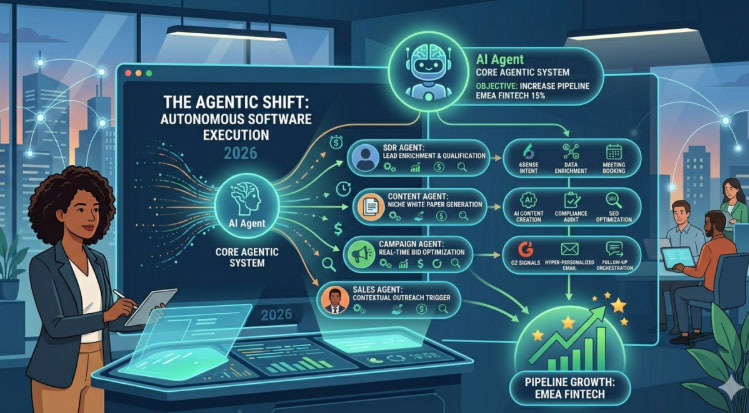
Agentic AI is not just another feature layered on top of existing tools. It introduces a fundamentally different approach where AI systems can take goals, execute multi step workflows, and produce outcomes with minimal human intervention. This change has significant implications for how B2B organizations evaluate software, structure workflows, and design their technology ecosystems.
What Is Agentic AI and Why It Matters
Agentic AI refers to systems that can act independently within defined parameters to complete tasks and workflows. Unlike traditional AI assistants that require step by step instructions, agentic systems can plan, execute, and refine tasks based on a defined objective.
For example, instead of asking an AI to summarize a report, a user could ask the system to analyze a market, identify trends, generate insights, and prepare a presentation. The system would then handle multiple steps internally, moving across data sources and tools.
This shift matters because it removes friction between intent and execution. It allows organizations to focus on outcomes rather than processes.
The Problem With Traditional SaaS Models
The traditional SaaS ecosystem was built on specialization. Organizations adopted tools for specific functions such as:
- CRM systems for sales management
- Marketing automation platforms for campaign execution
- Analytics tools for reporting and insights
- Workflow tools for task management
- Data platforms for storage and processing
While each tool added value, the cumulative effect created several challenges.
Fragmentation of Data
Data is often spread across multiple systems, making it difficult to generate unified insights. Teams spend significant time reconciling information instead of acting on it.
Workflow Inefficiency
Tasks that span multiple tools require manual coordination. This slows down execution and introduces opportunities for error.
Tool Overload
Organizations invest heavily in software subscriptions, but utilization often remains low. Teams struggle to adopt and integrate multiple tools effectively.
Delayed Decision Making
When insights require pulling data from multiple sources, decision making becomes slower and less responsive to market changes.
Agentic AI directly addresses these challenges by consolidating workflows into a single intelligent layer.
How Agentic AI Challenges SaaS Structures
Agentic AI systems are not designed to replace all software immediately. However, they introduce a new way of thinking about functionality and value.
From Tools to Capabilities
Instead of relying on separate tools for each function, agentic AI provides capabilities that can span multiple domains. A single system can:
- Analyze customer data
- Generate marketing insights
- Support sales strategies
- Create reports and forecasts
This reduces the need for multiple specialized tools.
From Interfaces to Outcomes
Traditional software requires users to navigate interfaces and execute tasks manually. Agentic AI focuses on delivering outcomes directly.
This shift changes user expectations. Instead of asking how to use a tool, users ask what they want to achieve.
From Static Workflows to Dynamic Execution
SaaS tools often rely on predefined workflows. Agentic AI systems can adapt workflows dynamically based on data and context.
This flexibility allows organizations to respond to changing conditions more effectively.
Implications for B2B Buyers in 2026
The rise of agentic AI is already influencing how B2B organizations evaluate technology investments.
Reduction in Tool Sprawl
Organizations are beginning to question whether they need as many tools as they currently use. The focus is shifting toward consolidation and integration.
Higher Expectations From Vendors
B2B buyers now expect vendors to provide intelligence, not just functionality. Tools that cannot adapt or integrate with AI systems risk becoming less relevant.
Shift Toward Platform Thinking
Instead of building a stack of disconnected tools, organizations are prioritizing platforms that can unify data, workflows, and intelligence.
What This Means for SaaS Vendors
The rise of agentic AI creates both challenges and opportunities for SaaS providers.
Need for Integration
Vendors must ensure their platforms can integrate seamlessly with AI systems. Open APIs and flexible architectures become critical.
Focus on Differentiated Value
As AI handles more general tasks, SaaS vendors must focus on specialized capabilities that deliver unique value.
Evolution of Pricing Models
Traditional pricing based on seats or usage may need to evolve. Outcome based or value based pricing models may become more relevant.
Strategic Considerations for B2B Organizations
To navigate this shift effectively, organizations should focus on:
Evaluating Workflow Efficiency
Identify processes that involve multiple tools and assess whether they can be simplified through AI.
Investing in Data Infrastructure
Agentic AI depends on high quality, unified data. Organizations must prioritize data integration and governance.
Balancing Automation and Control
While AI can automate workflows, human oversight remains essential for strategic decisions and risk management.
Partnering With Adaptive Vendors
Organizations should work with vendors that understand these shifts and can evolve alongside changing technology landscapes.
The Role of Pineapple View Media in This Transition
As B2B organizations navigate the shift toward agentic AI and platform based ecosystems, the role of strategic partners becomes increasingly important.
Pineapple View Media focuses on helping organizations align demand generation, data strategy, and audience intelligence with evolving technology trends. In a landscape where tools are changing rapidly, clarity and adaptability become key differentiators.
Conclusion
The rise of agentic AI marks a turning point in the evolution of B2B technology. It challenges the traditional SaaS model by introducing systems that can execute workflows, generate insights, and deliver outcomes across multiple functions.
In 2026, the question is no longer how many tools an organization uses. It is how effectively those tools contribute to intelligent, outcome driven operations.
B2B organizations that recognize this shift early and adapt their technology strategies accordingly will be better positioned to reduce complexity, improve efficiency, and stay competitive in an increasingly intelligence driven market.