
Intent data has become the hottest buzzword in B2B marketing. Every vendor claims to offer it. Every platform promises to use it. And every marketer is being told they need it.
But here's what nobody's saying: Most teams using intent data aren't seeing results. They're paying for signals they don't understand, targeting accounts that aren't actually in-market, and wondering why their conversion rates haven't improved.
The problem isn't intent data itself. It's how it's being sold, interpreted, and applied.
Let's start with the basics. Intent data is behavioral signal data that indicates when a company or individual is researching a particular topic or solution category.
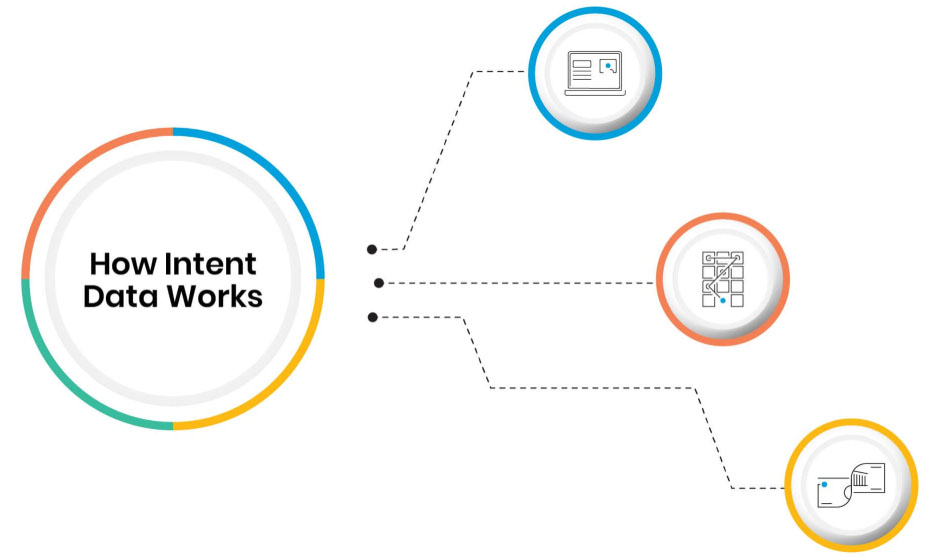
That signal can come from multiple sources.
This is activity on your own properties. Someone visits your website. They download your whitepaper. They attend your webinar. They check out your pricing page.
You own this data. It's reliable. And it's directly relevant to your business. The challenge is that you only capture intent from people who already know about you.
This comes from activity across the wider web. Someone reads articles about your solution category on industry publications. They visit review sites comparing vendors. They consume content from your competitors.
This data is valuable because it captures intent before prospects reach your site. But it's also less precise. You're inferring interest based on content consumption patterns, not direct engagement with your brand.
Some vendors aggregate intent signals across thousands of B2B sites through data co-ops. They track which companies are consuming content related to specific topics.
This can be powerful for identifying accounts that are actively researching, but it comes with limitations. You're seeing company-level signals, not individual-level. And the quality depends on how well the vendor's topic taxonomy aligns with your actual use cases.
When used correctly, intent data can dramatically improve your targeting and conversion rates.
Intent data is excellent for answering the question: Which companies are currently researching solutions like ours?
If you're selling cybersecurity software and a company suddenly shows a spike in intent around "ransomware protection" and "zero trust architecture," that's a strong signal they're in-market.
You can prioritize that account in your ABM programs. You can tailor your outreach. You can time your campaigns for when they're most likely to engage.
When you're working with a list of potential accounts, intent data helps you decide who to call first.
The company showing strong intent signals this week gets prioritized over the one that hasn't shown any activity in months. That's just smart resource allocation.
Intent data tells you what topics a prospect is researching. You can use that to tailor your messaging.
If they're reading about compliance requirements, lead with your compliance features. If they're focused on integration capabilities, highlight your API. If they're comparing pricing models, address cost upfront.
That level of personalization dramatically improves response rates.
Now let's talk about where most teams go wrong with intent data.
Someone downloading a whitepaper on "cybersecurity trends" is not the same as someone visiting your competitor's pricing page. But many intent data vendors treat all signals equally.
The result? You're chasing weak signals that don't actually indicate buying intent.
Knowing that "Acme Corp" is researching your category is useful. But it doesn't tell you who at Acme Corp is doing the research.
Is it an intern writing a college paper? Is it a consultant gathering market intelligence? Or is it the CISO who has budget and authority?
Without contact-level data, you're still guessing about who to reach out to.
Intent data has a shelf life. Someone who was researching your solution last month might have already made a decision.
If you're working with stale intent data, you're reaching out after the buying window has closed. That's not just ineffective. It's annoying to the prospect.
Just because a company is consuming content in your category doesn't mean they're ready to buy. They might be doing early research. They might be helping a portfolio company. They might be writing an article about the space.
Intent data gives you signals. But you still need context to interpret them correctly.
The companies getting real value from intent data have figured out how to combine it with other data sources and human judgment.
Intent tells you who's researching. Firmographics tell you who can actually buy.
If a company shows strong intent but they're too small to afford your solution, that's not a priority lead. If they're in an industry you don't serve well, same thing.
Smart teams filter intent signals through their ICP criteria before acting on them.
When intent data surfaces a high-priority account, smart teams don't just blast them with outreach. They do research first.
Who's the decision-maker? What's their current tech stack? Have they posted about any relevant challenges recently? Are they hiring in relevant roles?
That context turns intent data from a signal into an actionable insight.
Intent data doesn't tell you what to say or how to position your solution. It tells you when to say it.
Your messaging still needs to be compelling. Your value prop still needs to be clear. Your positioning still needs to resonate.
Intent data just helps you deliver that message at the right moment.
Here's where things get messy. The intent data market is flooded with vendors, and most of them oversell what their data can do.
There are only a handful of major intent data sources. But there are dozens of vendors reselling that data with their own interface and markup.
You're paying for the same underlying signals, just packaged differently. And often paying more than you need to.
Some intent data is based on actual content consumption patterns. Some is inferred from IP addresses visiting websites. Some is modeled based on predictive algorithms.
The quality and accuracy of these different approaches varies dramatically. And most vendors aren't transparent about their methodology.
Intent data is most valuable when it's fresh. But many vendors batch and resell data that's days or weeks old.
By the time you receive the signal and act on it, the prospect might have already moved on.
If you're going to invest in intent data, here's how to do it right.
Don't buy intent data because everyone else is. Buy it because you have a specific problem it can solve.
Are you trying to identify new accounts to target? Prioritize your existing pipeline? Time your outreach? Personalize your messaging?
Define the use case first. Then evaluate whether intent data can actually help.
Don't commit to an expensive annual contract until you've proven the data works for your business.
Run a pilot. Track whether intent-driven campaigns perform better than your baseline. Measure conversion rates, not just lead volume.
If the data doesn't improve your outcomes, don't scale it.
Intent data should be the first filter, not the last. Use it to identify promising accounts. Then validate those accounts with manual research and data verification before you start outreach.
That combination of signal and validation is what drives real results.
The best intent data vendors don't just sell you raw signals. They help you interpret them.
They understand your ICP. They filter out noise. They combine intent with other data sources to give you actionable insights, not just data dumps.
Intent data is powerful when used correctly. It can help you identify in-market accounts, prioritize your outreach, and personalize your messaging.
But it's not magic. It won't replace strategy. It won't fix bad data. And it won't automatically fill your pipeline.
The companies that get real value from intent data are the ones that treat it as one input among many. They layer it with firmographic data, validate it with research, and combine it with strong messaging and positioning.
That's when intent data stops being hype and starts driving revenue.
Ready for demand gen that combines smart targeting with real validation? Let's talk.