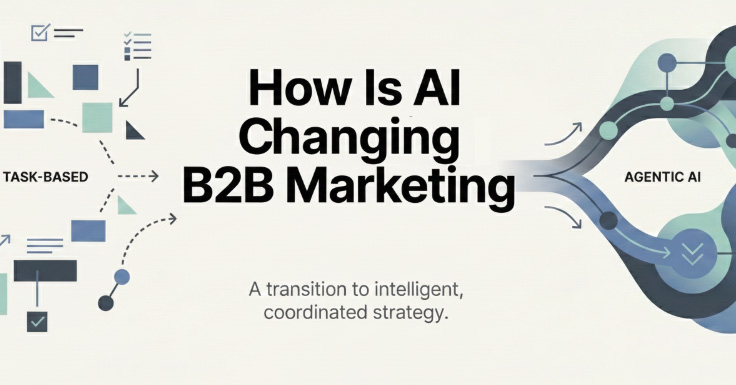
Go to market strategy has traditionally been treated as a fixed blueprint that organizations build annually and execute throughout the year. In 2026, this model is rapidly losing effectiveness. B2B markets have become fluid environments where buyer behavior shifts quickly, competitive landscapes evolve constantly, and digital signals reshape engagement in real time. To remain competitive, organizations are transitioning toward adaptive go to market strategies that continuously evolve alongside market conditions.
Adaptive go to market strategies rely heavily on intelligence, cross functional collaboration, and flexible execution models. Instead of committing to rigid campaign structures, B2B teams are developing frameworks that respond dynamically to performance insights and customer signals.
Why Static Go To Market Models Are Failing
Traditional go to market strategies were built around predictable buyer journeys and stable industry trends. Today, several factors disrupt this predictability.
Buyers conduct extensive independent research before engaging vendors.
Economic fluctuations impact purchasing cycles and budget approvals.
Digital platforms influence buyer decisions at multiple stages.
AI driven insights expose real time engagement patterns.
When strategies remain fixed, organizations risk misalignment between outreach efforts and actual buyer readiness. Adaptive strategies solve this challenge by allowing teams to pivot quickly and align with current market signals.
The Core Pillars of Adaptive Go To Market Strategy
Real Time Buyer Intelligence
Understanding buyer intent is fundamental to adaptive strategies. Organizations must leverage data signals from digital engagement, content consumption, and account level activity to guide outreach decisions. Real time intelligence helps teams identify which audiences are actively researching solutions and which require nurturing.
Cross Functional Revenue Alignment
Adaptive strategies require marketing, sales, and customer success teams to operate as a unified revenue engine. Shared insights allow each function to contribute to pipeline development, customer onboarding, and retention outcomes. Alignment ensures consistent messaging and smoother transitions across the buyer journey.
Continuous Campaign Optimization
Rather than running campaigns based on predetermined timelines, adaptive strategies rely on continuous optimization. Performance metrics, audience feedback, and engagement trends influence campaign adjustments. This improves efficiency and reduces wasted spend.
Flexible Channel Strategy
Modern buyers interact across multiple platforms. Adaptive strategies integrate email, social engagement, digital advertising, webinars, and content syndication within a coordinated framework. Channel allocation changes based on performance data rather than historical assumptions.
Organizational Changes Required
Adopting adaptive go to market strategies requires operational changes within B2B organizations.
Teams must invest in unified data infrastructure to support real time analysis.
Leadership must support agile planning frameworks instead of annual static planning cycles.
Technology stacks must integrate seamlessly across CRM, analytics, and marketing automation systems.
Measuring Success in Adaptive Go To Market Models
Success metrics must evolve beyond traditional lead counts. Modern performance indicators include engagement depth, pipeline velocity, conversion quality, and customer lifetime value. Organizations that adopt adaptive strategies typically experience stronger sales alignment and improved forecasting accuracy.
Conclusion
Adaptive go to market strategy represents the future of B2B growth in 2026. Organizations that embrace real time intelligence, cross functional collaboration, and flexible execution will respond faster to buyer behavior and market changes. As competition intensifies, adaptability becomes the most valuable strategic asset.