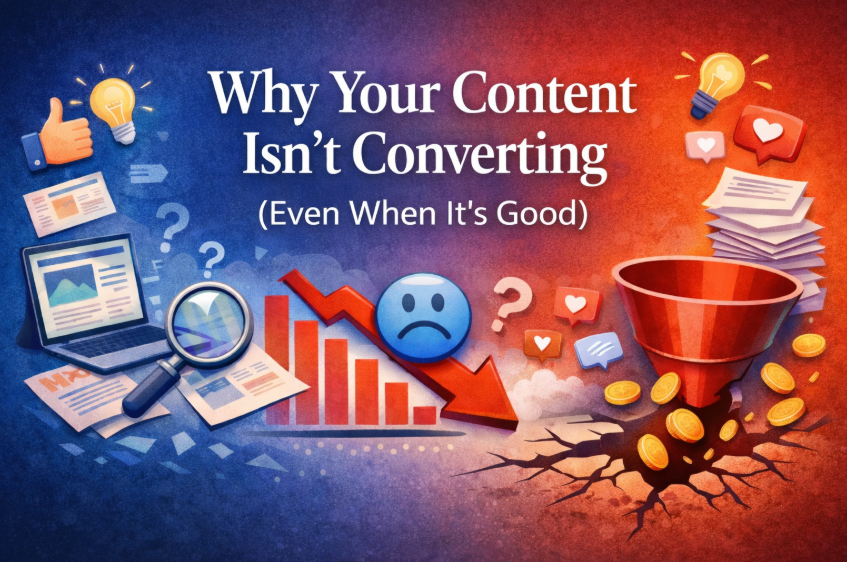
You've done everything right. Your whitepaper is well-researched. Your case studies are compelling. Your webinar had great attendance. And yet, when you look at the pipeline impact, it's... underwhelming.
This is one of the most frustrating problems in B2B marketing. You create content that's genuinely valuable, and it still doesn't move the needle.
The issue isn't the content itself. It's who's seeing it.
Most B2B marketers assume that if they build great content, the right audience will find it. They optimize for SEO. They promote on LinkedIn. They gate it behind a form and call it demand gen.
But here's the reality: Your ideal buyers aren't searching for your content. They're not browsing your blog. They're not following your company page.
They're busy solving problems, attending meetings, and dealing with their own priorities. If your content doesn't land directly in front of them at the right moment, it might as well not exist.
Think about what your target buyer's day looks like. They're getting 100+ emails. They're in back-to-back meetings. They're being pitched by your competitors. They're managing their own deliverables.
Your content is competing for attention with all of that noise. And unless you have a precision distribution strategy, your message gets lost.
You post your content on LinkedIn. You run some sponsored posts. You send it to your email list. And you hope it finds the right people.
But hope isn't a strategy. Broad promotion gets broad results. You'll get some engagement, sure. But most of it will come from people who were never going to buy from you anyway.
Let's talk about the most common B2B content strategy: Gate everything behind a form. Collect leads. Pass them to sales.
On paper, it makes sense. In practice, it creates three problems.
The people most likely to convert are the ones who are already deep in their buying process. They've done their research. They know what they need. They're comparing vendors.
These buyers don't want to fill out forms. They want to consume content quickly and move on to the next step. When you gate everything, you're making it harder for them to evaluate you.
Gated content attracts people who want free resources, not people who want to buy. They'll download your PDF, skim it, and move on. They'll never convert.
Meanwhile, your sales team is chasing these leads, wondering why none of them are qualified.
When you gate content, you're measuring form fills, not intent. You're counting downloads, not engagement.
You end up with a CRM full of contacts who showed mild interest once but were never serious prospects.
The companies that are getting real ROI from content in 2026 have made a fundamental shift. They've stopped treating content as a lead gen tactic and started treating it as a precision targeting tool.
Before they create any piece of content, they ask: Who is this for? Not in a vague persona sense. In a specific, actionable sense.
Is this for CFOs at mid-market SaaS companies who are evaluating new finance platforms? Is this for IT directors at enterprises dealing with security compliance? Is this for demand gen leaders who are rebuilding their tech stack?
When you know exactly who needs to see your content, you can build a distribution strategy that actually reaches them.
Broad promotion is a waste of budget. Precision distribution is what drives pipeline.
That means using intent data to identify companies that are actively researching solutions like yours. It means targeting decision-makers at those companies with content that speaks directly to their challenges. It means reaching them through channels where they're actually paying attention.
This isn't about blasting content to everyone. It's about getting the right content in front of the right people at the right time.
Downloads don't matter if people aren't reading. Form fills don't matter if they're not converting.
The metric that matters is engagement. Did they read the whole piece? Did they share it with their team? Did they come back for more?
When you focus on engagement, you start to see which content is actually influencing deals. And you can do more of what works.
Here's where most B2B content strategies break down. You create great content. You promote it broadly. You collect leads. And then... nothing happens.
The problem is the gap between creation and conversion. You're assuming that if people download your content, they'll magically turn into buyers. But that's not how it works.
Your whitepaper on cybersecurity best practices is valuable. But if it's landing in the inbox of someone who's not currently evaluating security vendors, it's just noise.
The same piece of content delivered to a CISO who's actively researching solutions? That's a conversation starter.
Context is everything. And context comes from knowing who you're reaching and why they should care right now.
Creating content is step one. Getting it in front of the right people is step two. But step three is where most teams fail.
What happens after someone engages with your content? Are you nurturing them with related resources? Are you connecting them with sales at the right moment? Are you tracking their behavior to understand intent?
If your follow-through is weak, even the best content won't convert.
The fix isn't to create more content. It's to be smarter about who sees it.
Don't create content and then figure out who it's for. Start with your ideal customer profile. Understand their challenges. Map their buying journey. Then create content that meets them exactly where they are.
Broad promotion is cheap. Precision targeting costs more upfront but delivers exponentially better results.
Work with partners who can get your content in front of the exact people who need to see it. Not just anyone in your target industry. The decision-makers. The people with budget. The ones who are actively in-market.
Stop measuring downloads. Start measuring pipeline influence. Which content is driving conversations? Which pieces are showing up in closed deals? Which resources are being shared internally by your buyers?
Those are the metrics that matter.
Your content isn't failing because it's bad. It's failing because it's not reaching the right people.
In 2026, the companies that win with content are the ones that treat distribution as seriously as creation. They don't hope their audience finds them. They go find their audience.
And when they do, the content works. Leads turn into conversations. Conversations turn into pipeline. And pipeline turns into revenue.
That's the difference between content that sits on your blog and content that actually drives growth.