
Introduction
As 2026 begins, B2B revenue models are undergoing a fundamental redesign. The traditional approach of volume driven lead generation, static funnels, and linear sales stages is rapidly losing effectiveness. Buyers are more informed, decision making is distributed across larger buying groups, and economic pressure has increased scrutiny on every dollar spent. In this environment, revenue growth is no longer driven by scale alone. It is driven by precision.
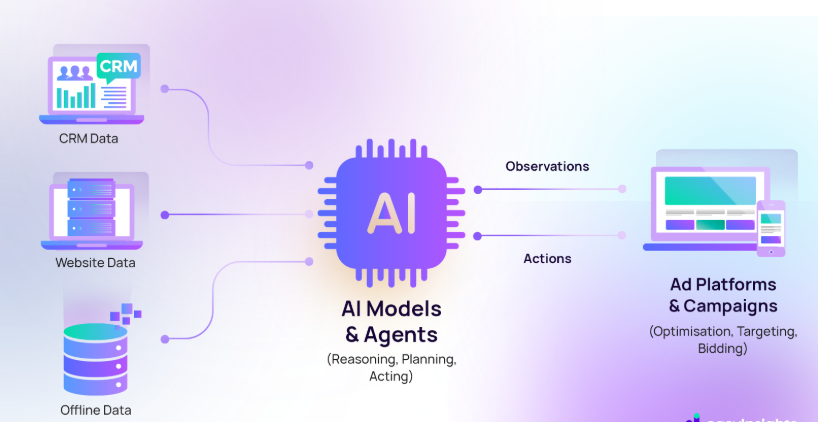
Artificial intelligence is becoming the core system that enables this shift. In 2026, AI is not just supporting revenue teams. It is reshaping how revenue is planned, generated, measured, and sustained. Sales, marketing, and revenue operations are converging around AI driven intelligence that prioritizes accuracy, timing, and relevance over activity volume.
Why Traditional Revenue Models Are Breaking Down
For years, B2B revenue strategies relied on predictable inputs. More leads meant more opportunities. More outreach meant more pipeline. That model no longer holds. Buyers now complete much of their research independently. They engage later, expect relevance immediately, and disengage quickly when messaging feels generic.
At the same time, buying groups have expanded. Decisions involve technical evaluators, financial stakeholders, operational leaders, and executive sponsors. Each role evaluates value differently. Static revenue models cannot accommodate this complexity.
In 2026, organizations realize that revenue growth requires understanding behavior, intent, and readiness at a much deeper level. AI provides that understanding.
The Shift From Volume to Precision
AI led revenue models focus on identifying the right accounts, the right stakeholders, and the right moment to engage. Instead of maximizing activity, teams maximize impact.
Precision driven revenue models rely on AI to:
- Detect real buying intent early
- Prioritize accounts based on readiness
- Align messaging with stakeholder needs
- Optimize timing across long sales cycles
- Forecast outcomes with higher accuracy
This shift reduces waste, improves efficiency, and increases predictability.
How AI Is Reshaping Sales Strategy in 2026
Sales teams in 2026 depend on AI to guide daily execution. AI analyzes engagement data, research behavior, and historical deal patterns to help sellers focus their efforts strategically.
Key changes include:
- Account prioritization based on live signals
- Stakeholder mapping across buying groups
- Deal risk identification before late stage failure
- Intelligent recommendations for next best actions
Sales conversations become more consultative. Sellers arrive prepared with context and insight rather than generic pitches. AI enables this level of preparation consistently across teams.
How AI Is Transforming Marketing’s Role in Revenue
Marketing in 2026 is no longer measured only by lead volume. It is measured by its influence on pipeline quality and deal progression. AI allows marketing teams to connect content, campaigns, and engagement directly to revenue outcomes.
AI helps marketing teams:
- Identify which topics move buyers forward
- Personalize journeys based on behavior
- Adjust campaigns dynamically based on performance
- Align messaging with sales priorities
- Attribute revenue impact across channels
Marketing becomes an intelligence partner to sales rather than a top of funnel engine.
Revenue Operations as the Central Intelligence Layer
Revenue operations plays a critical role in AI led revenue models. In 2026, revenue operations teams unify data across sales, marketing, finance, and customer success to create a single view of performance.
AI supports revenue operations by:
- Normalizing data across systems
- Identifying performance gaps
- Improving forecast accuracy
- Supporting scenario planning
- Aligning teams around shared metrics
This unified approach reduces friction and improves coordination across the revenue engine.
AI and the Evolution of Forecasting
Forecasting has historically been one of the weakest areas in B2B revenue planning. Manual inputs, subjective judgment, and outdated data lead to unreliable projections.
In 2026, AI driven forecasting models analyze thousands of variables including:
- Engagement trends
- Deal velocity
- Stakeholder behavior
- Historical conversion patterns
- External market indicators
This results in forecasts that adapt continuously and reflect real conditions rather than assumptions.
The Financial Impact of Precision Revenue Models
Precision driven revenue models improve financial efficiency across the organization. By focusing on high probability opportunities, organizations reduce customer acquisition costs and improve return on investment.
Benefits include:
- Lower cost per opportunity
- Higher win rates
- Shorter sales cycles
- More predictable revenue streams
- Improved alignment with finance planning
Finance teams gain confidence in revenue projections, supporting better investment decisions.
Challenges Organizations Must Address
Despite its advantages, AI led revenue transformation presents challenges. Data quality remains a major obstacle. AI systems require clean, unified data to produce accurate insights. Fragmented systems reduce effectiveness.
Change management is also critical. Teams must trust AI recommendations and adapt their workflows. Without proper training, AI insights may be ignored or misused.
Governance and transparency are equally important. Revenue leaders must ensure AI driven decisions are explainable and aligned with ethical standards.
What Revenue Leaders Should Focus On in 2026
To succeed in the new revenue landscape, leaders should prioritize:
- Integrating AI into daily workflows
- Aligning sales, marketing, and revenue operations around shared data
- Training teams to interpret and apply AI insights
- Measuring success based on outcomes rather than activity
- Continuously refining models based on real performance
AI is most effective when paired with human judgment and strategic clarity.
The Competitive Gap Will Widen
In 2026, the gap between precision driven organizations and traditional revenue teams will widen quickly. Organizations that rely on outdated models will struggle with inefficiency, poor forecasting, and inconsistent performance.
Those that embrace AI led precision will move faster, adapt better, and earn stronger buyer trust.
Conclusion
2026 marks a turning point for B2B revenue strategy. Volume driven models give way to precision led systems powered by AI. Sales, marketing, and revenue operations align around intelligence, timing, and relevance. Organizations that adopt this approach will build more resilient revenue engines and gain a lasting competitive advantage. Precision is no longer optional. It is the foundation of sustainable B2B growth in 2026.