Demand generation has often been measured through numbers. Clicks, impressions, form fills, cost per lead, conversion rates, accepted leads, meetings booked, and pipeline influenced. These metrics are important because they help teams understand campaign performance.
But in 2026, one factor is becoming harder to ignore.
Brand trust.
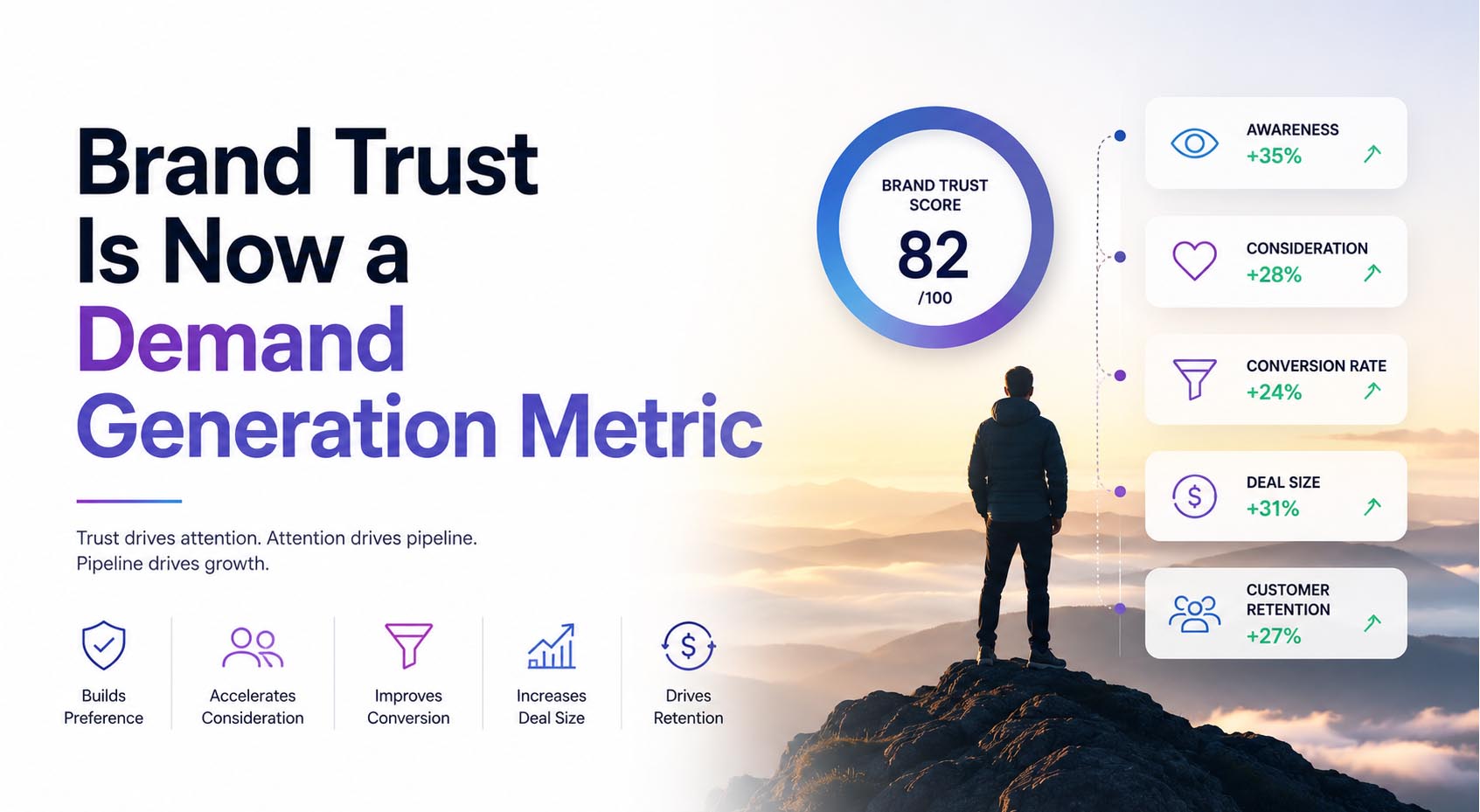
Trust may not always appear clearly in a dashboard, but it strongly influences whether buyers engage, respond, convert, and move forward. A campaign does not perform only because it reaches the right inbox. It performs because the buyer believes the message is worth their time.
This is why brand trust is becoming a demand generation metric.
Buyers are surrounded by too much content
B2B buyers are exposed to more content than ever before. Every vendor is publishing blogs, reports, guides, webinars, videos, comparison pages, newsletters, and social posts. AI has made content production even faster, which means the market is becoming more crowded.
The problem is not that buyers lack information. The problem is that they do not know which information to trust.
A buyer may receive five emails about the same business challenge in one week. They may see multiple vendors making similar claims. They may read articles that sound polished but say very little. They may attend webinars that feel more like product pitches than useful discussions.
In this environment, attention is not earned through volume. It is earned through credibility.
A buyer is more likely to engage with a brand that feels informed, consistent, and useful. They are more likely to register for a webinar if previous content delivered value. They are more likely to respond to outreach if the message reflects real understanding. They are more likely to enter a sales conversation if the brand has already built confidence.
This is where trust becomes part of demand generation performance.
Lead generation without trust creates weak momentum
It is possible to generate leads without building trust. A campaign can capture registrations through a strong headline, an interesting asset, or broad distribution. But if the brand behind the campaign does not feel credible, those leads may not move far.
This is a common issue in B2B.
A lead may download an asset but ignore follow-up. A webinar attendee may never respond to sales. A prospect may engage once and disappear. A campaign may look successful by lead count but produce little pipeline movement.
The issue is not always targeting. Sometimes the issue is trust.
Buyers may be interested in the topic, but not convinced by the brand. They may value the content, but not see the company as a serious option. They may enter the funnel, but not feel enough confidence to continue.
That is why demand generation teams need to think beyond capture. They need to think about belief.
Does the buyer believe this company understands the problem?
Does the buyer believe the solution is credible?
Does the buyer believe the brand can support their business?
Does the buyer believe the next conversation will be useful?
If the answer is no, campaign performance will suffer.
Brand and demand are not separate anymore
For a long time, many companies treated brand and demand as separate functions.
Brand was seen as long-term. Demand was seen as short-term. Brand focused on awareness, perception, and positioning. Demand focused on leads, pipeline, and measurable activity.
That separation is becoming less useful.
Modern B2B buyers move across many touchpoints before taking action. They may first notice a brand through a LinkedIn post, then read an article, then attend a webinar, then receive an email, then visit a landing page, then speak to sales. Every touchpoint shapes trust.
If the brand message is inconsistent, the buyer feels confused. If the content is generic, the buyer loses interest. If the landing page makes broad claims without proof, the buyer hesitates. If sales outreach does not match the campaign context, confidence drops.
Brand and demand must work together because the buyer experiences them together.
A strong brand makes demand generation easier. It improves recognition, response, conversion, and sales readiness. A weak brand forces demand campaigns to work harder because every interaction has to overcome doubt.
Trust improves conversion quality
Trust does not only increase engagement. It improves the quality of engagement.
When buyers trust a brand, they are more likely to provide accurate information, attend the session they registered for, read follow-up content, respond to outreach, and involve other stakeholders. They are also more likely to enter the conversation with a positive view of the company.
This matters because demand generation is not only about creating activity. It is about creating movement.
A campaign that generates 500 low-confidence leads may produce less value than a campaign that generates 150 highly engaged, trust-based leads. The second campaign may result in better conversations, stronger qualification, and more meaningful pipeline.
This is why teams need to look at metrics beyond lead volume.
Acceptance rate, engagement depth, repeat interaction, meeting quality, sales feedback, account fit, and pipeline movement all help show whether trust is turning into demand.
Consistency builds credibility
Trust is built through consistency.
A B2B brand should not feel different at every touchpoint. The website, campaign emails, landing pages, social posts, sales decks, newsletters, and event messaging should all reflect the same core position.
This does not mean repeating the same words everywhere. It means the brand should have a clear point of view.
What problem does the company solve?
Who does it help?
Why is its approach different?
What proof supports the claim?
What value should the buyer expect?
If these answers keep changing, buyers become unsure.
Consistency is especially important in competitive categories. Many vendors sound similar. They use the same phrases, make the same promises, and claim the same outcomes. A clear and consistent message helps buyers remember why one company is different.
For Pineapple View Media, this principle matters deeply. In B2B demand generation, quality, precision, fresh data, validation, and responsive client management are not just service details. They are trust signals. They show clients that lead generation is being handled with discipline, not guesswork.
Original content strengthens trust
In a market filled with AI-generated sameness, original content has become more valuable.
Original content does not mean saying something complicated. It means saying something useful, clear, and grounded in real business understanding. Buyers can tell when an article is written only to fill a content calendar. They can also tell when a brand is sharing practical insight from market experience.
Strong content builds trust by helping buyers think better.
It explains problems clearly. It challenges weak assumptions. It gives practical guidance. It connects trends to business impact. It avoids empty claims. It respects the buyer’s intelligence.
This type of content does not just support SEO or social posting. It supports demand generation by creating confidence before the buyer enters a formal sales process.
When buyers repeatedly find value in a brand’s content, the brand earns attention over time.
Proof matters more than promises
B2B buyers are careful because decisions carry risk. A poor vendor decision can waste budget, slow teams, damage internal credibility, and create operational problems.
That is why proof matters.
Promises like “high quality leads,” “better ROI,” or “faster growth” are not enough by themselves. Buyers want to understand how those outcomes are created.
In demand generation, proof can come from process clarity. How is targeting done? How is data validated? How is consent captured? How are leads checked? How is campaign performance reported? How does the partner respond when changes are needed?
The more clearly a company explains its process, the more trust it builds.
Proof can also come from case examples, client retention, campaign experience, industry focus, and operational transparency. But the key is to make trust tangible. Buyers should not have to guess why the company is credible.
Trust also affects sales conversations
Demand generation does not stop when a lead is passed to sales. Trust must continue into the sales conversation.
If the campaign message was consultative but the sales follow-up is aggressive, trust weakens. If the landing page promised insight but the call becomes a generic pitch, trust weakens. If the buyer’s engagement history is ignored, trust weakens.
Sales teams need to carry the brand promise into the conversation.
That means understanding the campaign theme, the buyer’s interest, the content they engaged with, and the likely reason they converted. A relevant follow-up shows the buyer that the company is paying attention. A generic follow-up suggests the lead was just another name in the system.
This is why sales and marketing alignment directly affects trust.
How B2B teams can measure trust signals
Trust is not always easy to measure, but it can be observed through patterns.
Useful trust signals may include:
- Repeat content engagement
• Webinar attendance from target accounts
• Newsletter retention
• Branded search growth
• Direct website traffic
• Higher landing page conversion rates
• Improved sales acceptance rates
• Better meeting quality
• Positive sales feedback
• More referrals or inbound interest
• Stronger nurture engagement
• Increased response from known accounts
None of these metrics is perfect on its own. But together, they show whether buyers are responding with confidence.
B2B teams should not treat trust as something separate from performance. Trust is one of the reasons performance happens.
What companies should do next
Companies should review their demand generation programs through the lens of credibility.
Start with the buyer experience. If a prospect sees a LinkedIn post, clicks an article, downloads an asset, reaches a landing page, and receives a sales email, does the journey feel connected? Does the message feel consistent? Does the brand sound clear? Does the follow-up add value?
Then review the content. Is it original? Does it answer real buyer questions? Does it provide insight beyond surface-level trends? Does it explain the company’s approach clearly?
Next, review the proof. Are claims supported by process, examples, data, or clear reasoning? Can buyers understand why they should trust the company?
Finally, review the handoff between marketing and sales. Does sales receive enough context to continue the conversation properly?
These steps can improve both trust and campaign performance.
Final thoughts
Brand trust is now a demand generation metric because buyers do not respond to campaigns in isolation. They respond to the confidence a brand has built before, during, and after the campaign.
In B2B, trust affects whether someone opens an email, registers for a webinar, fills a form, takes a call, shares content internally, and moves toward a buying decision.
Lead volume still matters. Cost per lead still matters. Conversion rates still matter. But without trust, these numbers can create activity without real progress.
The strongest B2B companies will not choose between brand and demand. They will build both together.
They will create content that informs. Campaigns that feel relevant. Landing pages that explain value clearly. Sales conversations that respect buyer context. Reporting that looks beyond form fills and measures movement.
In a crowded market, buyers need more than another message.
They need a reason to believe.