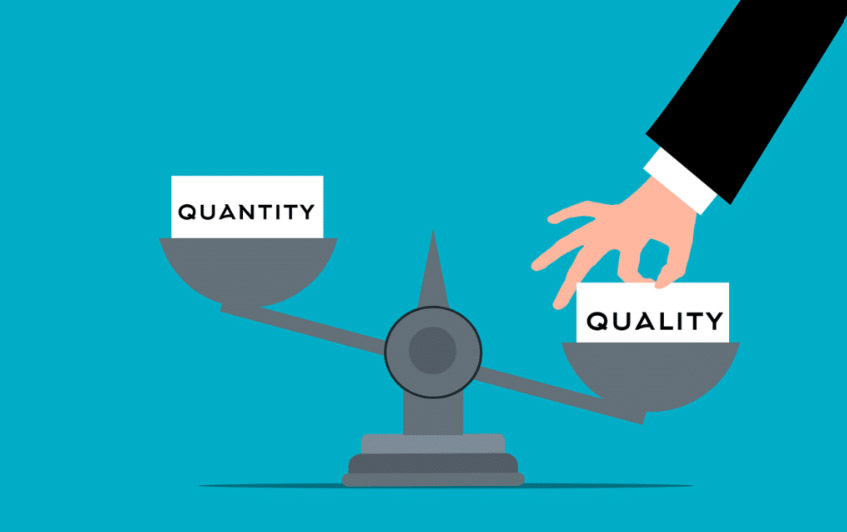
Creating B2B content used to require significant time.
Research.
Interviews.
Writing.
Editing.
Design.
Approvals.
AI has compressed much of that process.
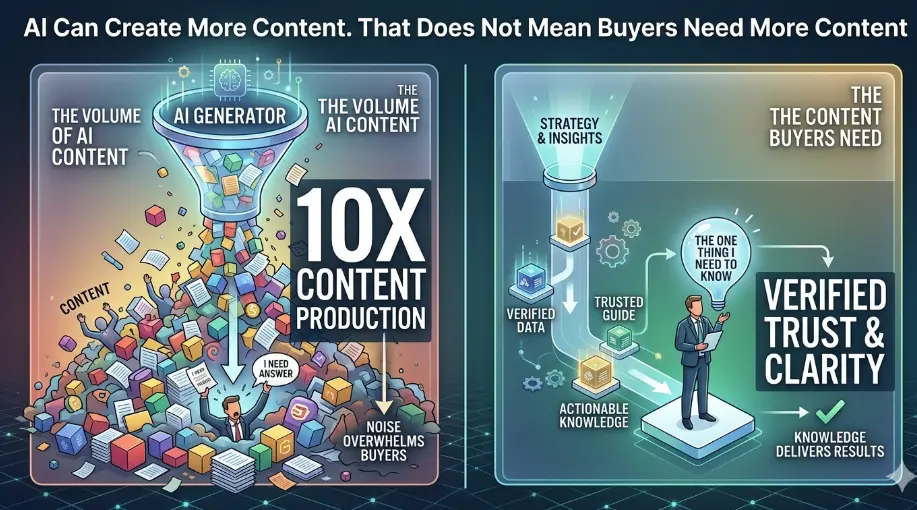
A marketing team can now create ten articles in the time it previously took to create one.
That sounds like progress.
But there is an obvious question.
Do buyers actually want ten times more content?
Probably not.
The bottleneck has moved
Content production used to be the difficult part.
Now the harder challenge is creating something worth paying attention to.
When everyone can produce:
- Blog posts
- Email copy
- Guides
- Social posts
- Summaries
- Sales material
the existence of content stops being impressive.
The thinking behind it becomes more important.
Buyers notice sameness
The problem with heavily automated content is rarely grammar.
It is sameness.
The same introductions.
The same five recommendations.
The same predictable conclusions.
The same polished corporate language.
After reading a few pieces, everything starts blending together.
That is where companies have an opportunity.
Instead of asking AI to create more, marketers can use it to help create better.
Use AI for research organisation.
Use it to explore angles.
Use it to summarise large information sets.
Use it to challenge assumptions.
Then bring human experience back into the final piece.
What have customers actually asked?
What surprised your sales team?
What failed?
What changed?
What do you believe that others in the market might disagree with?
Those are often the parts worth reading.
AI has dramatically reduced the cost of producing content.
It has not reduced the value of having something meaningful to say.
If anything, it has increased it.