Automation is now part of everyday B2B marketing.
AI can write emails, summarize calls, score leads, create reports, analyze campaign data, suggest content ideas, build audience segments, and support sales workflows. Marketing automation can trigger nurture journeys. CRM systems can route leads. Intent platforms can highlight account activity. Sales tools can recommend follow-up tasks.
These capabilities are valuable. They help teams move faster, reduce manual work, and improve consistency.
But they also create a new challenge.
When every company has access to similar tools, automation alone cannot be the differentiator.
The market is becoming louder. Buyers are receiving more emails, seeing more content, attending more webinars, and being targeted across more channels. Much of the messaging looks and sounds the same. It is polished, but not always useful. It is frequent, but not always relevant.
This is why human creativity is becoming more important in B2B, not less.
Automation increases output, but creativity creates meaning
Automation is excellent at increasing output. It can help teams produce more variations, more reports, more campaign drafts, and more follow-up sequences in less time.
But more output does not always create more impact.
A buyer does not respond because a company sends more messages. A buyer responds because the message feels relevant, credible, and worth their attention. That requires more than speed. It requires understanding.
Human creativity gives marketing its meaning. It helps a team find a sharper angle, a clearer message, and a better way to explain the buyer’s problem. It turns information into insight. It turns a campaign into a conversation. It turns a trend into a business point of view.
In B2B, creativity is not about being flashy. It is about being useful in a way that buyers remember.
The market is full of sameness
One of the biggest risks of AI and automation is sameness.
If many companies use similar tools to create similar content from similar prompts, the output naturally begins to feel similar. Articles repeat the same points. Emails use the same structure. Social posts sound familiar. Landing pages make broad promises without much depth.
Buyers notice this.
They can tell when content has no real point of view. They can tell when an email is personalized only at a surface level. They can tell when a brand is publishing because it needs activity, not because it has something valuable to say.
This creates fatigue.
B2B buyers are busy. They do not have time to engage with every generic message. They filter quickly. They ignore what feels repetitive. They pay attention to brands that explain things clearly and understand their world.
That is where creativity becomes a competitive advantage.
Creativity begins with buyer understanding
Strong B2B creativity does not begin with design, slogans, or clever headlines. It begins with buyer understanding.
Before creating any campaign, teams need to understand what the buyer is dealing with.
What pressure is the buyer facing?
What problem is slowing their team down?
What risk are they trying to reduce?
What outcome does leadership expect?
What objections may appear internally?
What information would help them move forward?
What makes the decision difficult?
These questions create stronger marketing than simply asking what topic should be posted next.
A creative campaign is not creative because it looks different. It is creative because it sees the buyer clearly and communicates in a way that feels directly connected to their reality.
For example, a campaign about lead generation should not only say, “Generate better leads.” Many companies say that. A stronger campaign should explain why poor-quality leads waste sales time, damage trust between teams, and reduce campaign confidence. That is a more meaningful angle because it connects the service to a real business problem.
AI can assist, but humans must decide the point of view
AI can help with research, structure, rewriting, summarizing, and idea generation. It can support the creative process. But it should not replace the point of view.
A point of view comes from experience, market understanding, client conversations, campaign learnings, and strategic judgment. It reflects what a company believes about its industry.
For Pineapple View Media, a strong point of view may include the belief that B2B lead generation should be built on fresh data, proper targeting, validation, compliance, and responsive client management. It may include the idea that content syndication should be measured by intent and quality, not only lead volume. It may include the belief that demand generation is strongest when marketing and sales follow-up are connected.
These ideas are not generic. They reflect how the company wants to be understood in the market.
AI can help shape the language, but people must define the belief behind it.
Without a point of view, content becomes forgettable.
Creativity improves demand generation performance
Creativity is often treated as a brand function, but it has a direct impact on demand generation.
A stronger campaign idea can improve email opens, landing page conversions, webinar registrations, content downloads, and sales conversations. A clearer message can reduce confusion. A sharper headline can attract the right audience. A better asset angle can generate stronger intent. A more thoughtful nurture path can keep buyers engaged longer.
This is not just about making campaigns look better. It is about making them work better.
For example, two campaigns may promote the same webinar. One uses a generic title about “digital transformation.” The other speaks directly to a business problem, such as reducing operational delays or improving customer response time. The second campaign is more likely to attract buyers with a specific need because it is clearer and more relevant.
Creative strategy affects the quality of demand.
Brand voice matters in an AI-heavy market
As AI-generated content becomes more common, brand voice becomes more important.
A clear brand voice helps buyers recognize a company. It creates consistency across articles, emails, social posts, landing pages, sales decks, and event messaging. It makes the company feel more human and more reliable.
In B2B, the best voice is usually clear, confident, informed, and practical. It should not sound robotic. It should not sound exaggerated. It should not rely on buzzwords to create importance.
Buyers want clarity.
A strong brand voice explains complex topics in a simple way. It respects the buyer’s time. It avoids empty claims. It speaks with confidence because it understands the subject.
For InsideHub, this means publishing articles that sound original, thoughtful, and grounded in the B2B market. The writing should not feel like copied industry commentary. It should feel like Pineapple View Media is speaking from its own understanding of demand generation, lead quality, data, buyer behavior, and revenue growth.
That voice is part of the brand.
Creativity helps simplify complex ideas
B2B topics can become complicated quickly. AI, cybersecurity, ABM, intent data, compliance, sales enablement, and demand generation all involve many details.
Creativity helps simplify these ideas without making them shallow.
A good marketer can take a complex issue and explain why it matters to the buyer. They can remove unnecessary jargon. They can organize the message clearly. They can choose examples that make the point easier to understand.
This is valuable because buyers do not reward complexity for its own sake. They reward clarity.
A creative B2B article should help the reader think, “This company understands the problem.” A creative email should help the reader think, “This is relevant to me.” A creative landing page should help the visitor think, “This is worth my time.”
Simplicity is not a lack of intelligence. In B2B, simplicity is often the result of strong thinking.
Human judgment protects quality
Automation can create speed, but human judgment protects quality.
Without human review, automated content can become inaccurate, repetitive, too generic, or misaligned with the brand. AI may use phrases that sound strong but do not reflect the company’s real capabilities. It may create claims that are too broad. It may miss market nuance. It may produce content that looks fine but adds little value.
Human review is essential.
Teams should ask:
- Is this message true to our brand?
• Does it reflect our real expertise?
• Does it say anything useful?
• Is it specific enough for our audience?
• Does it avoid empty buzzwords?
• Does it help the buyer make a better decision?
• Is the tone right for our market?
These checks ensure that automation supports quality instead of reducing it.
For B2B brands, credibility is too important to leave unchecked.
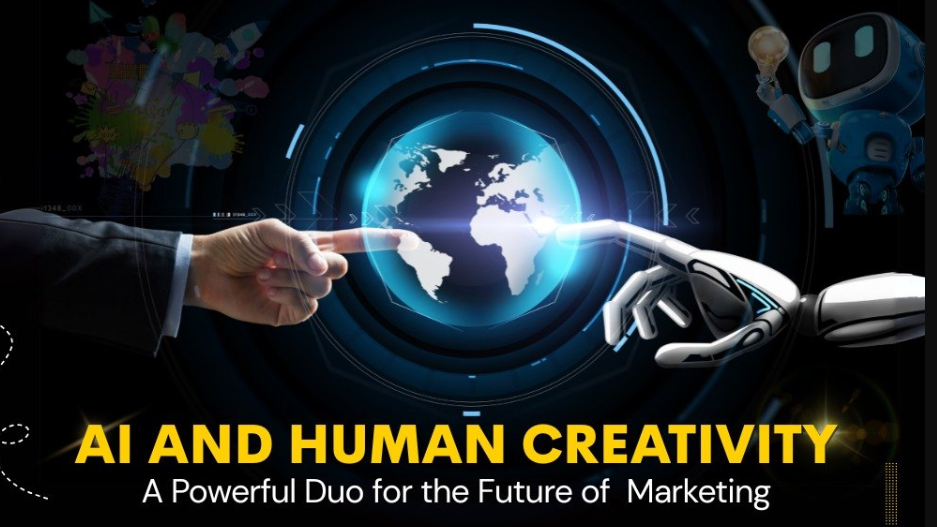
The best teams will combine AI and creativity
The future is not about rejecting automation. That would be unrealistic and unnecessary.
The best B2B teams will combine AI efficiency with human creativity.
AI can help create first drafts, summarize research, analyze campaign performance, identify patterns, repurpose content, and speed up production. Humans can define strategy, choose the angle, refine the message, protect the brand voice, and understand buyer emotion.
This combination is powerful.
It allows teams to move faster without becoming generic. It helps them produce more relevant content without losing quality. It gives marketers more time to focus on insight, positioning, and campaign strategy.
Automation should handle repetitive work. Humans should guide the thinking.
That is the balance B2B companies need.
Creativity must be connected to business outcomes
Creative work should not be separated from performance.
In B2B, creativity must support business goals. It should help generate better engagement, stronger trust, more relevant leads, better nurture, improved sales conversations, and clearer market positioning.
This means creative teams and performance teams need to work together.
The creative team should understand campaign goals, audience criteria, buyer pain points, and lead quality expectations. The demand generation team should understand why message quality, content depth, and brand voice affect performance. Sales should share feedback on which messages create good conversations.
When these teams work together, creativity becomes a revenue asset.
It is not decoration. It is part of how demand is created.
What B2B companies should do next
B2B companies should review their marketing through the lens of originality and relevance.
Start with content. Are articles saying something useful, or simply repeating common industry points? Are they written in the company’s own voice? Do they help the buyer understand a problem more clearly?
Then review campaigns. Are emailers built around real buyer concerns, or generic service claims? Are webinar titles specific enough? Are landing pages clear? Does the follow-up continue the same message?
Next, review AI usage. Is AI helping improve quality, or only increasing output? Are humans reviewing the final message? Is the brand voice protected?
Then review performance. Which creative angles produce stronger engagement? Which topics attract better leads? Which messages lead to better sales conversations?
These questions help companies use creativity more strategically.
Final thoughts
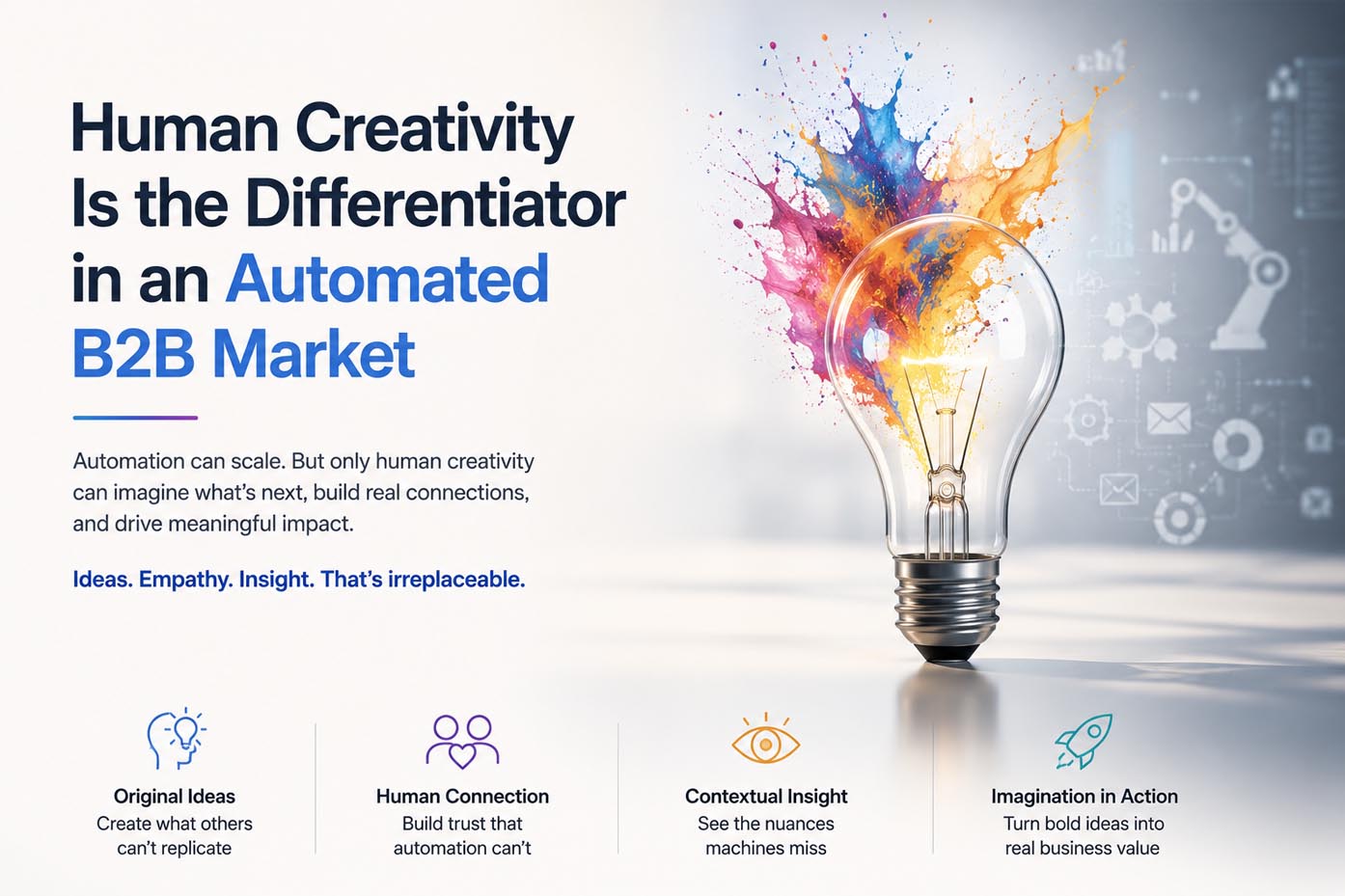
Automation is changing B2B marketing, but it is not removing the need for human creativity. It is making creativity more valuable.
When every company can create more content, the advantage shifts to companies that can create better content. Better does not always mean longer, louder, or more polished. It means clearer, more relevant, more original, and more useful.
AI can help teams move faster. Automation can improve consistency. Data can guide decisions. But human creativity gives marketing direction.
It helps brands stand out in a crowded market. It turns buyer understanding into meaningful communication. It builds trust. It improves campaign performance. It makes the brand easier to remember.
In an automated B2B market, the strongest companies will not be the ones producing the most noise.
They will be the ones saying the right things, to the right people, with the most clarity.
That is where human creativity becomes the real differentiator.