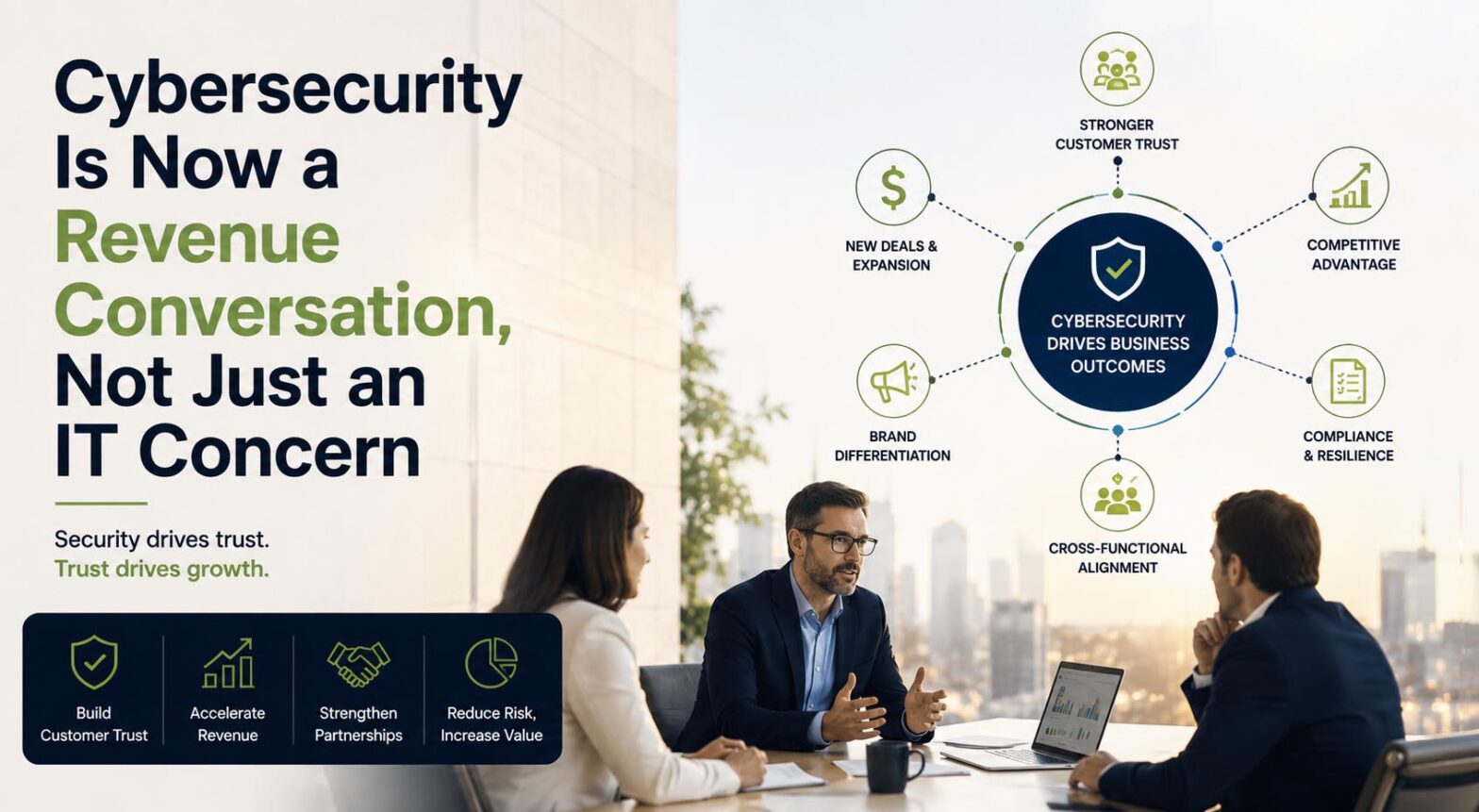
Cybersecurity has always been important for business. But in 2026, it is no longer only an IT conversation.
It is now a revenue conversation.
Every B2B company depends on trust. Buyers share information, connect systems, review contracts, approve vendors, and rely on partners to handle sensitive business processes. If a company cannot demonstrate strong security practices, it may lose opportunities before the product, service, or pricing is fully discussed.
This is especially true in enterprise sales. Security reviews are becoming more detailed. Procurement teams are asking harder questions. Legal teams are looking closely at data handling. Buyers want to know how their information will be protected, who will access it, where it will be stored, and what happens if something goes wrong.
For B2B companies, cybersecurity is now part of how trust is built.
Security now influences buying decisions
A buyer may like the service. The pricing may be acceptable. The business case may be strong. But if the vendor cannot pass a security review, the deal can slow down or stop completely.
This is happening across industries.
Technology companies want to protect systems and customer data. Financial services companies need strong compliance. Healthcare companies are cautious about sensitive information. Manufacturing firms worry about operational disruption. Large enterprises want to reduce vendor risk across their entire supply chain.
Even if a company is not selling cybersecurity software, its security posture still matters.
A demand generation partner, software vendor, data provider, marketing agency, analytics platform, or event technology company may all handle business information in some way. That makes security relevant to the buying process.
In B2B, trust is not built only through good messaging. It is also built through operational responsibility.
Buyers want confidence, not vague assurances
Many companies say they take data security seriously. But buyers need more than a statement.
They want clear answers.
How is data collected?
How is it stored?
Who has access?
How long is it retained?
What consent records are maintained?
What security controls are in place?
How are vendors reviewed?
What happens in case of an incident?
Are employees trained on data handling?
Is there a documented process?
These are practical questions, and they are increasingly common in B2B vendor reviews.
A company that can answer them confidently creates trust. A company that struggles to answer them creates doubt.
This does not mean every business needs to overwhelm prospects with technical documents in the first conversation. It means the organization should be prepared. Security information should be accurate, accessible, and aligned across sales, legal, operations, and leadership.
AI is increasing the security conversation
The rapid adoption of AI has made cybersecurity even more important.
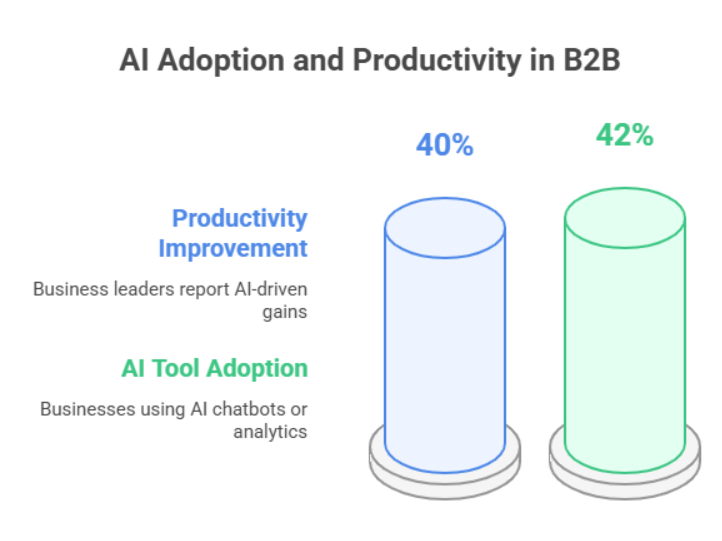
B2B teams are using AI tools for content creation, research, data analysis, customer support, lead scoring, reporting, workflow automation, and sales enablement. These tools can improve productivity, but they also raise new questions.
What data is being entered into AI systems?
Which tools are approved for business use?
Are employees using public AI tools with sensitive information?
How are AI-generated outputs reviewed?
Can confidential client data be exposed?
Are vendors using AI responsibly?
These questions matter because AI can create risk when used without governance.
For example, a team may paste client information into an unapproved tool without realizing the risk. A salesperson may rely on AI-generated outreach that includes inaccurate claims. A marketer may use AI to process contact data without proper controls. An operations team may automate a workflow without reviewing access permissions.
AI adoption should not happen without security rules.
B2B companies need clear internal policies around approved tools, data usage, review processes, and accountability. This is not only an IT responsibility. It affects marketing, sales, operations, legal, and client management.
Data security is central to demand generation
Demand generation companies work with valuable business information. This may include campaign data, contact details, consent records, lead information, client assets, audience criteria, and performance reports.
That makes data security an important part of service quality.
Clients want to know that their campaigns are being handled responsibly. They want confidence that leads are collected through proper methods, validated correctly, and delivered securely. They also want assurance that their brand is not exposed to compliance or reputational risk.
For demand generation partners, this is where process becomes a differentiator.
It is not enough to say leads will be delivered. The stronger question is how those leads are sourced, checked, protected, and documented.
A responsible demand generation process should include:
- Clear campaign requirements
• Proper consent capture
• Accurate data validation
• Secure lead delivery
• Limited access to sensitive files
• Defined retention practices
• Transparent reporting
• Quick issue resolution
• Compliance-aware communication
These steps are not just operational details. They are trust signals.
Security can support sales conversations
Security is often seen as something that slows down sales. But when handled properly, it can support sales.
A prepared company can answer buyer questions faster. It can reduce delays in vendor review. It can give procurement teams confidence. It can help sales teams respond to concerns without scrambling internally.
This creates a better buying experience.
When a buyer asks about data handling and receives a clear, structured answer, it reassures them. When a sales team has to chase multiple departments for basic information, it creates uncertainty.
Security readiness can therefore improve deal movement.
It also helps position the company as mature and reliable. In competitive B2B markets, maturity matters. Buyers are not only comparing features and pricing. They are comparing risk.
A vendor that looks organized, compliant, and security-aware has an advantage over one that appears informal or unclear.
The revenue cost of weak security readiness
Weak security readiness can affect revenue in several ways.
First, it can delay deals. If a company takes too long to answer vendor review questions, the buyer may lose momentum or choose another provider.
Second, it can reduce confidence. Even if the company eventually provides the required information, slow or unclear responses can make the buyer question overall reliability.
Third, it can increase internal workload. Sales, operations, legal, and leadership may have to repeatedly create answers from scratch because no central security documentation exists.
Fourth, it can create reputational risk. If data is mishandled, the damage can extend beyond one client. Trust once lost is difficult to rebuild.
Finally, weak security can affect renewals. Existing clients may reassess vendors regularly, especially when internal compliance standards change. A company that was approved once may need to prove itself again.
This is why security readiness should be treated as part of revenue operations.
Marketing should communicate responsibility
Cybersecurity does not need to dominate every marketing message. But B2B brands should communicate responsibility where it matters.
For example, a company handling business data should be clear about consent, validation, compliance, and secure handling. A software company should explain relevant security practices. A service provider should show that client information is protected. A data-focused company should be transparent about how information is managed.
This type of communication builds confidence.
It also helps differentiate the brand. Many vendors talk about speed, scale, and performance. Fewer explain the discipline behind their work.
For Pineapple View Media, this is especially relevant. In B2B lead generation and demand generation, quality is not only about delivering leads. It is also about delivering them responsibly. Fresh data, validation, consent, compliance, and client communication all contribute to trust.
A brand that can explain these practices clearly will stand out in a market where buyers are cautious.
Security needs cross-functional ownership
Cybersecurity cannot sit only with the IT team. It needs support across the business.
Marketing teams must ensure that forms, landing pages, consent language, and campaign messaging are accurate. Sales teams must understand how to discuss data handling with prospects. Operations teams must maintain clean processes for access, delivery, and record keeping. Legal teams must review policies and contracts. Leadership must set expectations and invest in proper controls.
This cross-functional ownership is important because risk can appear anywhere.
A weak password, an outdated file-sharing practice, an unclear consent process, or an unapproved AI tool can all create problems. Security depends on daily behavior, not just technical systems.
Training also matters. Employees should understand what information is sensitive, how to handle client files, what tools are approved, and when to escalate concerns.
The strongest security culture is built through habits.
What B2B companies should prepare
B2B companies should create a clear set of security and data responsibility documents that can support sales and client conversations.
This may include:
- A data handling overview
• A privacy and consent explanation
• A security controls summary
• An incident response outline
• Approved AI usage policy
• Vendor management process
• Access control policy
• Data retention guidelines
• Compliance documentation
• Frequently asked buyer questions
These documents do not need to be overly complex at the beginning. They need to be accurate, clear, and easy for internal teams to use.
The goal is readiness.
When a buyer asks security-related questions, the company should not start from zero. It should already have the answers.
Security and trust are connected
Trust is one of the most important factors in B2B. Buyers want to know that a vendor can deliver results, but they also want to know that the vendor will protect their business.
Cybersecurity strengthens that trust.
It shows that the company is serious. It shows that operations are mature. It shows that client relationships are handled with care. It shows that the business understands modern risk.
In a market where buyers are more cautious, these signals matter.
A company that treats security as a back-office issue may miss this opportunity. A company that treats security as part of the buyer experience can build stronger confidence.
Final thoughts
Cybersecurity is now a revenue conversation because it affects buying decisions, procurement approvals, client confidence, renewals, and brand reputation.
B2B companies cannot afford to treat security as something separate from growth. It is part of how deals are won, how trust is maintained, and how long-term relationships are protected.
The companies that prepare will move faster in sales conversations. They will answer buyer questions with confidence. They will reduce risk. They will strengthen their position as reliable partners.
The companies that ignore it may find that security concerns slow growth, even when their product or service is strong.
In 2026, cybersecurity is not just about protection.
It is about trust, readiness, and revenue confidence.