For decades, B2B growth has been built around campaigns.
A campaign is launched. It runs for a fixed period. It generates leads. It ends. Then the cycle repeats.
This approach made sense when buyer behavior was predictable and attention was easier to capture.
But that environment no longer exists.
In 2026, B2B buying is continuous. Buyers are always researching, always evaluating, and often making decisions long before they formally engage with vendors.
In this reality, campaign-based thinking is starting to break down.
Because campaigns are temporary.
Buyer intent is not.
The Problem With Start-Stop Growth Models
Campaigns operate in bursts.
They create spikes of activity followed by periods of silence.
During the active phase, engagement increases. Leads come in. Sales teams are busy. There is momentum.
Then the campaign ends.
And everything slows down.
This creates an inconsistent pipeline.
Some months are strong. Others are weak. Forecasting becomes difficult. Sales teams experience cycles of overload and inactivity.
But the biggest issue is not inconsistency.
It is missed opportunity.
Because while your campaign is inactive, your buyers are still active.
They are researching competitors. Exploring alternatives. Consuming content. Forming opinions.
And if you are not present during that time, you are simply not part of the decision.
Understanding Continuous Buyer Behavior
Modern B2B buyers do not follow a linear journey.
They do not move cleanly from awareness to consideration to decision.
Instead, their journey looks more like a loop.
They:
- Discover a problem
- Research possible solutions
- Pause due to internal priorities
- Return to the problem later
- Re-evaluate options
- Engage when timing aligns
This process can take weeks or months.
And it rarely aligns with the timeline of a campaign.
Which means if your presence is limited to specific windows, you are only capturing a fraction of real demand.
What Is an Always-On Demand Engine
An always-on demand engine is not a single campaign.
It is a system designed to:
- Continuously identify demand
- Engage relevant audiences
- Nurture interest over time
- Convert when the buyer is ready
It operates without interruption.
Not in bursts, but as a steady, consistent presence.
This does not mean running the same campaign forever.
It means creating a structure where:
- Targeting is continuously refined
- Messaging evolves based on insights
- Engagement happens across multiple touchpoints
- Data flows back into the system to improve performance
It is dynamic, not static.
Why Always-On Models Are More Effective
The biggest advantage of an always-on approach is alignment with how buyers behave.
Instead of trying to create demand within a fixed period, it focuses on capturing demand whenever it exists.
This leads to:
More consistent pipeline generation. Because there is no downtime in engagement.
Better timing. Because buyers are engaged when they are actually active, not when a campaign happens to be running.
Stronger brand presence. Because repeated, consistent exposure builds familiarity and trust.
And over time, this creates a compounding effect.
Each interaction builds on the previous one.
Each engagement increases the likelihood of future conversion.
The Role of Data in Always-On Systems
Always-on demand engines rely heavily on data.
Not just for targeting, but for continuous optimization.
Every interaction provides insight.
- Who is engaging
- What content is resonating
- Which accounts are showing increased activity
- Where interest is growing or declining
This data feeds back into the system.
Allowing teams to:
- Adjust targeting in real time
- Refine messaging based on response
- Prioritize accounts showing strong signals
This creates a feedback loop.
One that improves performance over time, rather than resetting with every new campaign.
Why Content Needs to Evolve
In a campaign-based model, content is often created for a specific purpose.
A webinar. A whitepaper. A report.
In an always-on model, content becomes part of a larger ecosystem.
It needs to serve different roles:
- Early-stage education
- Mid-stage evaluation
- Late-stage decision support
And it needs to remain relevant over time.
This shifts the focus from creating isolated assets to building a content engine.
One that continuously supports the buyer journey, rather than appearing only at specific moments.
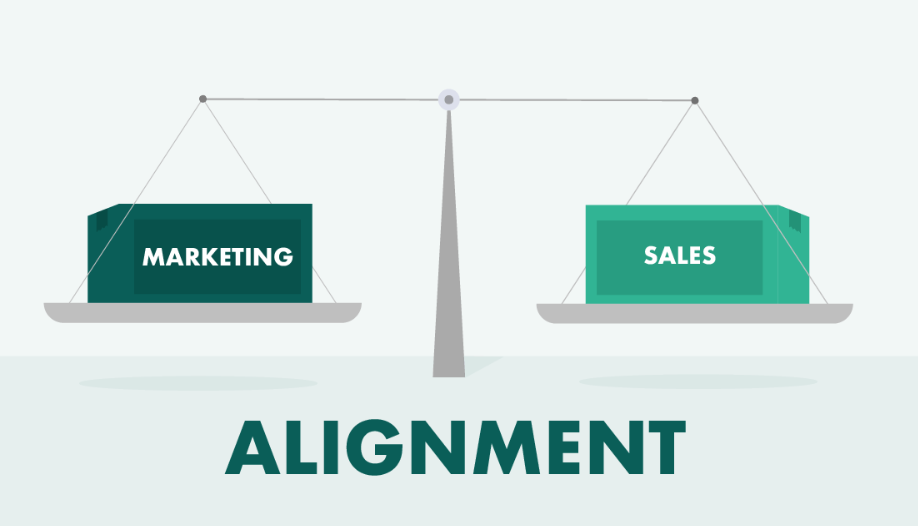
Sales and Marketing Alignment Becomes Critical
An always-on model cannot function in silos.
Because engagement is continuous, handoffs between marketing and sales become more fluid.
Sales needs visibility into:
- Which accounts are active
- What interactions have already taken place
- Where the buyer is in their journey
Marketing needs feedback on:
- Which engagements are converting
- Where conversations are stalling
- What messaging is resonating in real interactions
This creates a more integrated approach.
Where both teams are working within the same system, not separate processes.
Why Most Companies Struggle With This Shift
Moving to an always-on model is not easy.
Because it requires a fundamental change in how growth is managed.
Campaigns are easier to control.
They have clear start and end points. Defined budgets. Measurable outputs.
Always-on systems are different.
They require:
- Continuous investment
- Ongoing optimization
- Strong data infrastructure
- Cross-functional alignment
They also demand patience.
Results build over time, rather than appearing immediately.
For organizations used to campaign cycles, this shift can feel uncomfortable.
The Risk of Staying Campaign-Driven
Companies that continue to rely only on campaigns face increasing challenges.
They struggle with inconsistent pipeline.
They miss opportunities between campaign cycles.
They remain reactive, rather than proactive.
And over time, they fall behind competitors who maintain continuous engagement.
Because in a market where attention is always shifting, presence matters.
And absence is costly.
The Real Shift: From Interruption to Presence
At its core, this transition is about mindset.
Campaigns interrupt.
They appear, push a message, and disappear.
Always-on systems create presence.
They build familiarity over time. They engage without forcing. They align with the buyer’s pace.
This is a more natural way to influence decisions.
And in 2026, it is proving to be far more effective.
Final Thought
B2B growth is no longer about running better campaigns.
It is about building systems that do not stop.
Because your buyers do not stop.
They are constantly learning, evaluating, and deciding.
The companies that win are the ones that stay present throughout that journey.
Not just when it is convenient, but when it matters.