For a long time, B2B growth has been driven by a simple idea.
Generate enough leads, pass them to sales, and revenue will follow.
It worked when buying cycles were shorter, competition was lower, and access to decision-makers was easier.
But that model is no longer holding up.
In 2026, most B2B teams are generating leads. Very few are building pipeline that actually converts. The difference between the two is not small. It is structural.
And that is where the concept of pipeline engineering comes in.
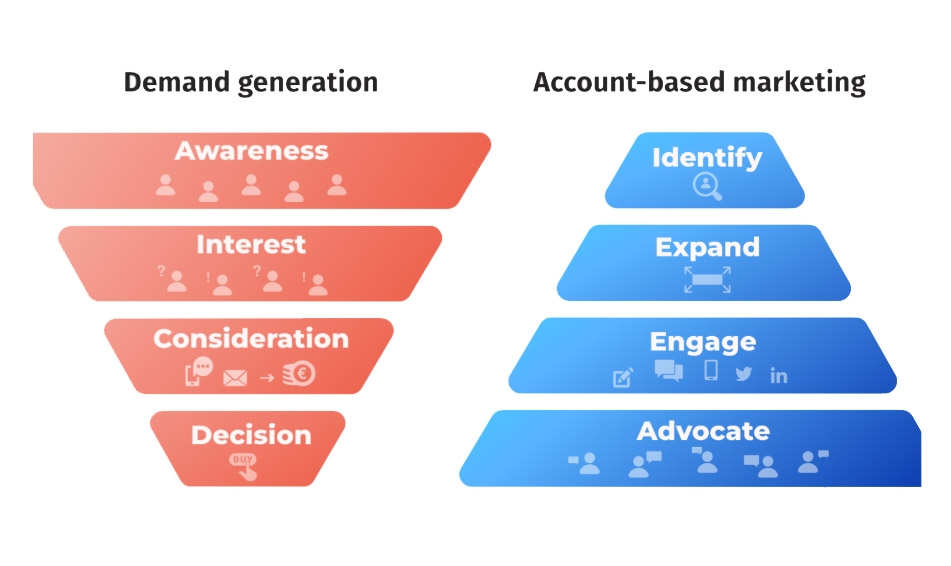
This is not a rebranding of demand generation. It is a complete shift in how growth is designed, executed, and measured.
Why Lead Generation Is No Longer Enough
Lead generation, as it exists in most companies today, is focused on one moment. A form fill, a download, a registration.
It captures interest.
But interest is not the same as intent.
This is where the disconnect begins. Because once that lead is passed to sales, reality kicks in. The buyer is often too early, not fully aligned internally, or not the right stakeholder to begin with.
What follows is a familiar pattern. Sales follow-ups stretch over weeks. Conversations start but do not progress. Opportunities are created but do not move forward.
From the outside, it looks like a conversion problem.
In reality, it is an input problem.
Pipeline engineering starts by accepting a hard truth. Most leads are not designed to convert. They are designed to be captured.
Understanding Pipeline as a System, Not an Outcome
The biggest mistake B2B teams make is treating pipeline as something that happens after lead generation.
High-performing companies treat pipeline as something that is built intentionally from the start.
They look at pipeline not as a number, but as a system made up of multiple interconnected parts.
It starts with who you target. It extends to how you engage. It depends on how conversations are initiated, nurtured, and expanded. And it ultimately reflects how well marketing and sales operate together.
When any one of these elements is weak, pipeline suffers.
This is why simply increasing lead volume rarely fixes pipeline issues. You are adding more input into a system that is not optimized to convert.
The Role of Intent in Modern Pipeline Creation
One of the most defining differences between lead generation and pipeline engineering is the role of intent.
In traditional models, intent is often assumed. If someone downloads a piece of content, they are treated as a potential buyer.
But in today’s environment, that assumption is risky.
Buyers consume content for many reasons. Research, curiosity, benchmarking, or even just passing interest.
Pipeline engineering focuses on identifying signals that indicate something deeper. Patterns of engagement, repeated interactions, activity across multiple stakeholders within the same account.
It is not about one action. It is about behavior over time.
This changes how campaigns are designed. Instead of pushing for immediate conversions, they are structured to observe, qualify, and engage based on actual buying signals.
From Individual Leads to Account-Level Momentum
Another major shift is moving away from individual leads to account-level thinking.
In most B2B deals, one person does not make the decision. Multiple stakeholders are involved, each influencing the outcome in different ways.
Pipeline engineering reflects this reality.
Instead of asking whether a lead is engaged, the question becomes whether the account is showing momentum.
Are multiple stakeholders interacting with your content? Is engagement increasing over time? Are conversations expanding across roles?
These signals are far more meaningful than a single form fill.
Because deals are not won by convincing one person. They are won by aligning an organization.
Why Data Quality Becomes the Foundation
As pipeline becomes more complex, the role of data becomes more critical.
Not just data in volume, but data in accuracy.
To engineer pipeline effectively, companies need clarity on who they are targeting, how those individuals are connected within an organization, and how engagement is evolving.
Without accurate data, even the best strategy breaks down.
Targeting becomes generic. Messaging loses relevance. Sales outreach feels disconnected. Opportunities are missed not because they do not exist, but because they are not visible.
This is why leading B2B teams are investing heavily in data validation, enrichment, and continuous updating. Because pipeline is only as strong as the data it is built on.
The Integration of Marketing and Sales
Pipeline engineering cannot exist in silos.
One of the biggest differences between average and high-performing organizations is how closely marketing and sales operate.
In traditional setups, marketing generates leads and passes them on. Sales takes over and attempts to convert.
In pipeline-driven models, this separation does not exist in the same way.
Marketing is involved in shaping the pipeline, not just feeding it. Sales provides continuous feedback that influences targeting, messaging, and engagement strategies.
There is a shared understanding of what qualifies as a real opportunity.
This alignment reduces friction. It improves efficiency. And most importantly, it ensures that pipeline is not just created, but converted.
Designing for Conversion From the Start
Perhaps the most important shift is this.
Pipeline engineering designs for conversion from the very beginning.
It does not wait until the sales stage to think about closing.
Every part of the process is built with the end outcome in mind.
Targeting is precise because irrelevant audiences do not convert. Messaging is clear because confusion slows decisions. Engagement is structured because random interactions do not build momentum.
This creates a very different kind of campaign.
One that may generate fewer leads, but produces significantly stronger pipeline.
Why Most Companies Struggle to Make This Shift
Despite understanding the limitations of lead generation, many companies struggle to adopt a pipeline-first approach.
Because it requires change at multiple levels.
It challenges how success is measured. It demands better data infrastructure. It requires deeper collaboration between teams. And it often means moving away from familiar metrics that feel comfortable but do not reflect reality.
There is also a timing challenge.
Lead generation delivers quick, visible results. Pipeline engineering takes longer to show impact, but delivers far more meaningful outcomes.
For many organizations, making that shift requires patience and conviction.
The Future of B2B Growth
The direction is clear.
B2B growth is moving away from isolated campaigns toward integrated systems. From volume to precision. From activity to outcomes.
Pipeline engineering sits at the center of this shift.
It reflects a more mature understanding of how buying actually happens. It aligns teams around shared goals. And it creates a more predictable path to revenue.
Final Thought
Leads are easy to generate.
Pipeline is not.
Because pipeline requires intent, alignment, timing, and trust.
The companies that win in 2026 are not the ones generating the most leads.
They are the ones building the strongest pipeline systems.
And that is a very different capability.