
Introduction
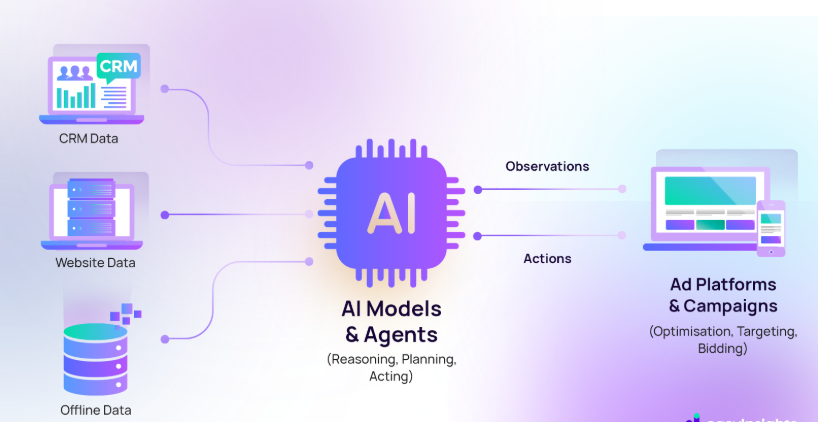
Artificial intelligence is reshaping the B2B revenue engine in ways that were unimaginable a few years ago. One of the most significant developments is the rise of AI agents inside sales and marketing workflows. Unlike traditional automation tools that require preset rules and manual oversight, AI agents operate with autonomy, context awareness, and continuous learning. These agents perform tasks, make recommendations, and support decision making across the entire customer journey. Their influence is transforming how organizations prospect, nurture, qualify, and convert customers in a highly competitive digital environment.
The emergence of AI agents reflects a broader shift toward intelligent operations. Businesses are looking for systems that adapt, optimize, and evolve without constant manual intervention. These agents can interpret signals, manage repetitive workflows, and personalize outreach at scale. As pressure grows to improve efficiency, accuracy, and performance, AI agents are becoming essential assets inside modern revenue teams.
Why AI Agents Matter for B2B Revenue Operations
B2B sales cycles are complex. They involve multiple decision makers, long evaluation timelines, and a significant volume of research and comparison. Human teams often struggle to maintain consistent engagement and track nuanced intent signals across channels. AI agents bridge this gap by monitoring digital behavior, analyzing patterns, and acting in real time.
They help answer critical questions such as:
- Which accounts show signs of emerging interest
- Which stakeholders are researching relevant topics
- Which content assets influence progression
- Which outreach messages generate higher conversion
- Which timing signals indicate readiness
This intelligence transforms sales and marketing from reactive functions into proactive ones.
How AI Agents Operate Across the Revenue Engine
- Automated Research and Account Profiling
AI agents scan publicly available data, behavioral patterns, content engagement, and historical interactions to build detailed account profiles. This eliminates hours of manual research and ensures teams have up to date insights on target organizations.
- Intelligent Prospecting
Agents analyze intent signals to identify accounts that are increasing their research activity. They determine which topics are trending, which stakeholders are involved, and which accounts are most likely to enter an active buying cycle.
This accelerates pipeline creation and reduces wasted outreach.
- Personalized Communication
AI agents craft messages based on role, industry, behavioral context, and content history. Instead of generic messaging, prospects receive communication aligned with their exact interests and timing. This level of personalization was once possible only with extensive manual effort.
- Multi Channel Nurture Automation
Agents manage email sequences, website interactions, paid media engagement, and content recommendations. They adjust nurture paths automatically based on changes in buyer behavior, ensuring relevance throughout the journey.
- Meeting Preparation and Follow Up
AI agents help sales teams prepare for meetings by summarizing account signals, surfacing relevant insights, and highlighting objections or opportunities. After meetings, agents draft summaries, action plans, and follow up communication.
- Pipeline Forecasting and Risk Detection
Agents detect declining engagement, delayed decision signals, and other risk indicators. They forecast pipeline health and highlight deals that require immediate intervention.
- Continuous Learning Through Feedback Loops
AI agents adapt based on what works. If specific messages lead to higher engagement, the agent adjusts future communication. This creates an evolving system where performance improves over time.
Impact on Sales Teams
AI agents free sales teams from repetitive tasks and administrative work, allowing them to focus more on relationship building and strategic activities. Sales professionals benefit from:
- Better visibility into account behavior
- Higher quality engagement opportunities
- Improved timing of outreach
- Personalized playbooks
- Data driven coaching and recommendations
As a result, sales cycles become more predictable, and conversion rates increase.
Impact on Marketing Teams
AI agents strengthen the marketing function in several ways:
- Enhanced segmentation accuracy
- Smarter distribution of content
- Real time adaptation of nurture pathways
- Improved alignment with sales
- Stronger attribution visibility
Marketing teams gain a deeper understanding of what drives interest at each stage.
Impact on Revenue Operations and Leadership
Revenue operations teams use AI agents to maintain data hygiene, automate system updates, and improve workflow efficiency. Leadership teams gain clearer forecasting, better insights into resource allocation, and stronger alignment across departments.
AI agents create an environment where revenue strategy becomes more coordinated and predictable.
Challenges and Limitations of AI Agents
- Quality of Data
AI agents require clean, structured data for optimal performance. Poor data quality can reduce accuracy or generate irrelevant recommendations.
- Change Management
Teams may require training to understand how AI agents work and how to use their recommendations effectively.
- Balance Between Automation and Human Oversight
AI agents enhance human intelligence but do not replace it. Strategic decisions, relationship building, and creativity remain human responsibilities.
- Ethical and Compliance Considerations
Agents must operate within clear boundaries to ensure responsible use of data. Transparency and compliance are essential to maintain trust.
- Integration With Legacy Systems
Some organizations struggle to integrate AI agents with older tools or fragmented environments. Addressing these gaps is critical.
Strategic Recommendations for Adopting AI Agents
- Start With High Impact Use Cases
Begin with tasks that consume significant time, such as research, profiling, or outreach personalization. - Establish Clear Governance Frameworks
Set rules around data use, messaging boundaries, and escalation processes. - Train Cross Functional Teams
Ensure marketing, sales, and revenue operations understand how to interpret AI insights. - Monitor Agent Behavior
Track performance regularly. Adjust strategies based on overall business goals. - Maintain Human Ownership of Key Decisions
AI should support decision making, not replace critical judgment. - Invest in Data Quality Initiatives
Structured, accurate data sets amplify the performance of AI agents.
The Future of AI Agents in B2B Revenue
The next generation of AI agents will take on even more advanced responsibilities. They will not only recommend actions but autonomously execute tasks such as scheduling meetings, building personalized microsites, or constructing multi step nurture flows. They will help unify insights across all engagement channels, giving organizations a holistic view of buyer behavior.
Future capabilities may include:
- Real time buying group visualization
- Predictive negotiation support
- Self optimizing outreach sequences
- Automated stakeholder alignment insights
- Continuous benchmarking across industries
AI agents will become a natural part of the revenue engine, working alongside human teams to drive performance, predictability, and growth.
Conclusion
AI agents are transforming B2B sales and marketing workflows by bringing intelligence, autonomy, and precision to the revenue engine. They allow organizations to operate faster, smarter, and with greater alignment. By freeing human teams from repetitive tasks and enhancing decision making with real time insights, AI agents unlock new possibilities for pipeline creation, engagement, and customer experience. As businesses adopt these systems, they gain a competitive advantage in an increasingly complex and fast paced market. The future of revenue will be shaped by the partnership between human expertise and AI powered intelligence.